Scarabs & scaraboids
Meaning
The scarab beetle rolls a ball of dung and its young seem to emerge from the earth by themselves, so Egyptians saw in it Khepri, the sun at dawn pushing itself into being. The hieroglyph kheper means 'to come into existence' and 'to transform'. A scarab is therefore a wearable word for renewal, self-creation and the daily rebirth of the sun.
Intent
Worn on a cord or set in a swivel ring, the scarab brought the wearer the sun's power of renewal and general good fortune. Its flat base was often cut as a seal, so it also carried a name, a title, a god or a motto that protected and identified its owner. Winged scarabs were sewn onto mummy nets so the dead would rise with the sun.
Significance
The scarab is the most numerous class of Egyptian object after pottery, surviving in hundreds of thousands. Because royal names were engraved on them, scarabs help archaeologists date sites across the Near East, and commemorative scarabs of Amenhotep III announced his marriage, lion hunts and a lake he built, like a pharaoh's press release.
History
Scarab amulets appear in the late Old Kingdom and become common in the First Intermediate Period (c. 2100 BCE) as seals. They peak in the Middle and New Kingdoms, spread through trade and imitation to Canaan, Phoenicia, Nubia, Etruria and Greece, and were copied by Phoenician workshops for export. Production continued into the Ptolemaic era, and scarabs remain the best-selling Egyptian souvenir today.
Making yours
Typical 1–3 cm long. Carve steatite and glaze it, or press-mould Egyptian faience (self-glazing quartz paste). Pierce lengthwise for a cord or set on a swivel ring.Ancient Egypt: the tradition
Amulets appear in Egyptian graves before writing, in the Badarian and Naqada cultures of the fifth and fourth millennia BCE, as shells, stones and simple animal shapes. With the Old Kingdom the repertoire grew into a systematic vocabulary of hieroglyph signs, gods and animals, and by the New Kingdom the Book of the Dead prescribed which amulet went where on the mummy. Mass production in faience from open moulds put them within reach of almost everyone. The Late and Ptolemaic periods (664–30 BCE) are the peak of variety, when a single mummy might carry dozens. The tradition outlived the pharaohs, feeding Graeco-Roman magical gems, Coptic Christianity and, through Phoenician traders, the whole Mediterranean. Flinders Petrie's 1914 catalogue counted 275 types.
 HedgehogEgypt, New Kingdom (1540–1069 BCE), Dynasty 18, reign of Amenhotep III (1390–1352 BCE) · c. 1391–1353 BCE
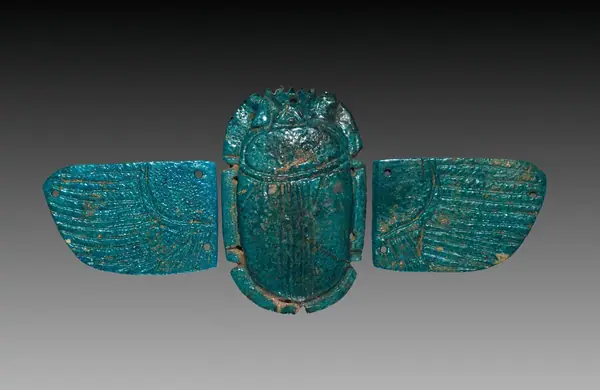 Winged Pectoral ScarabEgypt, Late period (715–332 BCE), Dynasty 26 · 664–525 BCE
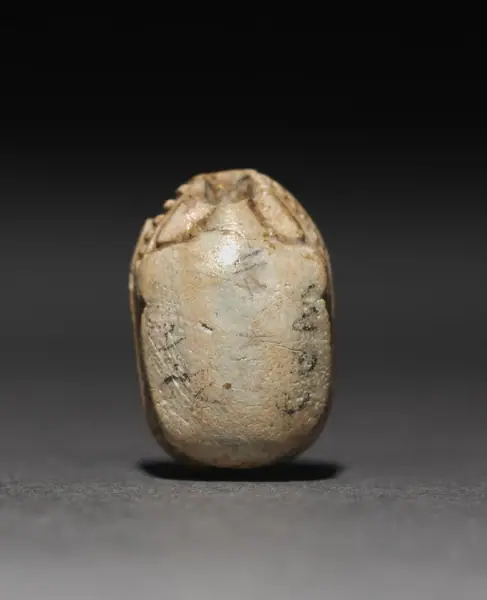 ScarabEgypt, Haraga, Wadi I, no number, Second Intermediate period (1648–1540 BCE) · 1648–1540 BCE
 ScarabEgypt, Modern forgery · 1900–1914
 ScarabEgypt, Second Intermediate period (1648–1540 BCE) · 1648–1540 BCE
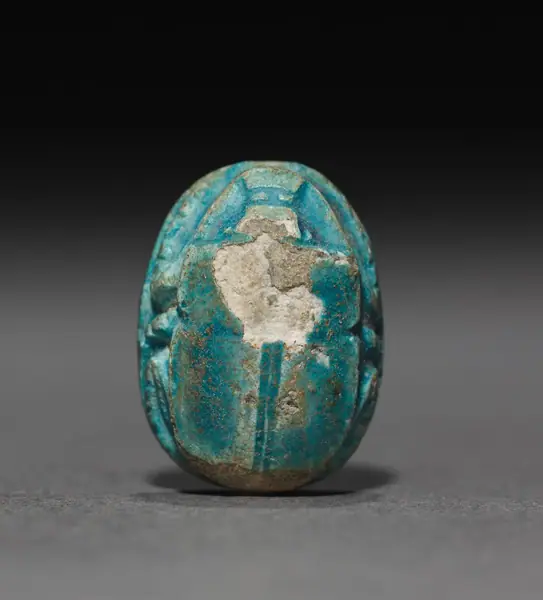 ScarabEgypt, Middle Kingdom (2040–1648 BCE), Dynasty 13 · 1901–1648 BCE
 ScarabEgypt, New Kingdom or modern forgery · 1550–1077 BCE
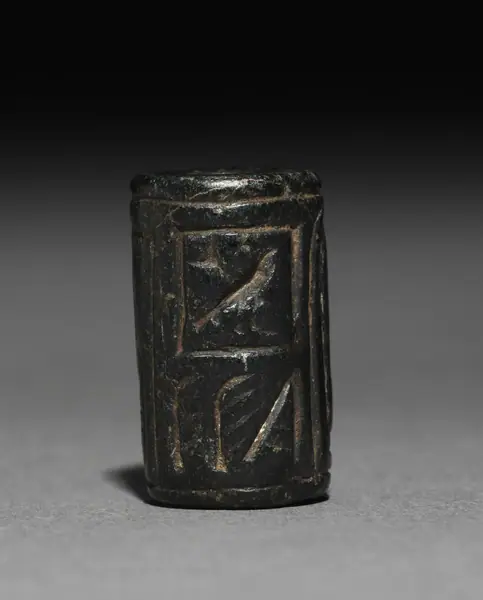 Cylinder Seal of MycerinusEgypt, Old Kingdom (2647–2124 BCE), Dynasty 4, reign of Menkaure (2532–2503 BCE) · 2573–2124 BCE
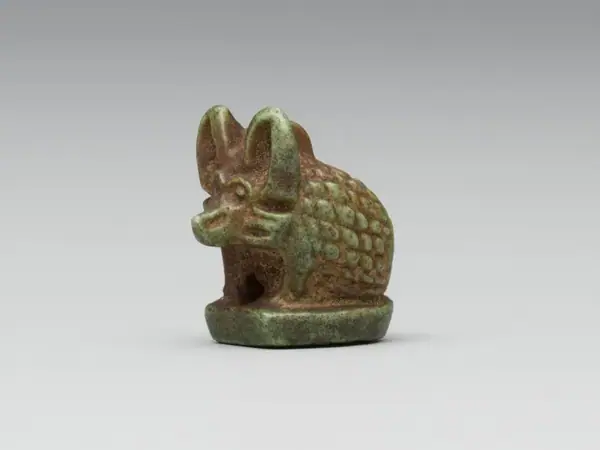 Scaraboid in the Form of a HedgehogEgypt · New Kingdom–Third Intermediate Period (about 1550–664 BCE)
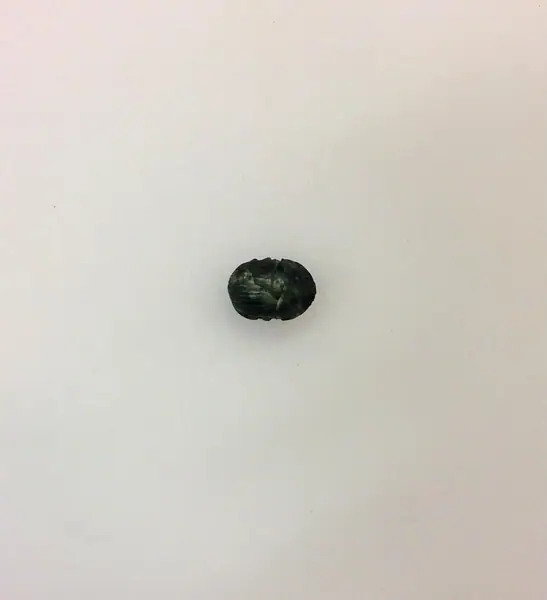 Scarab amulet, malachite, possibly Late or Ptolemaic PeriodEgypt · c. 664 BC - 30 BC
 Cowroid Seal Amulet Inscribed for the God's Wife HatshepsutEgypt · New Kingdom, ca. 1473–1458 BCE
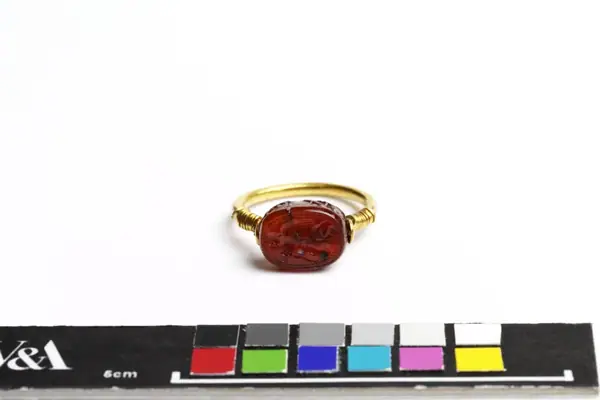 Scarab and winged figureItaly · 4th century BC
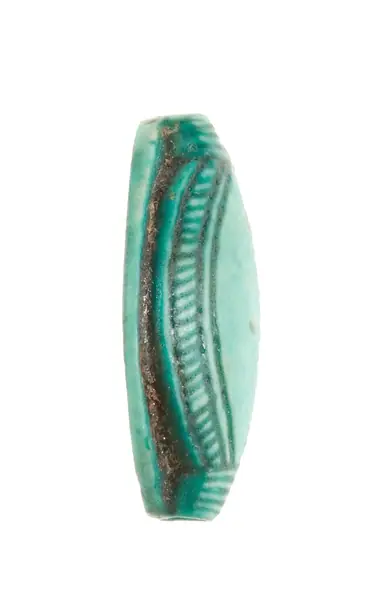 Cowroid Seal Amulet Inscribed with a Bolti FishHatshepsut · circa 1479 date QS:P571,+1479-00-00T00:00:00Z/9,P1480,Q5727902 –1458 B.C. Period: New Kingdom Dynasty: Dynasty 18, early
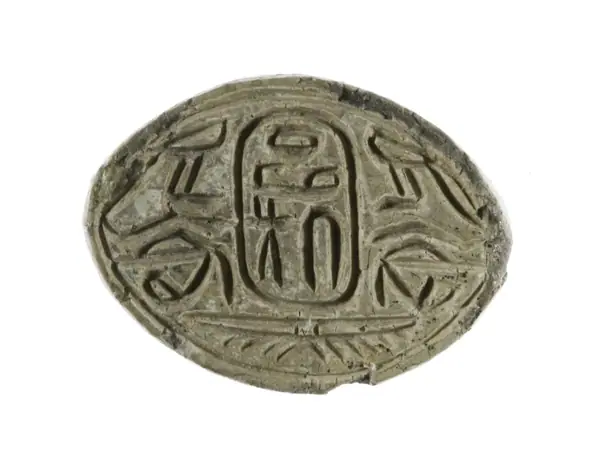 Cowroid Seal Amulet with the Name of the Hyksos King ApophisEgyptian 15th dynasty · circa 1581 date QS:P571,+1581-00-00T00:00:00Z/9,P1480,Q5727902 –1541 B.C. Period: Second Intermediate Period Dynasty: Dy
 Amulet with the Names of Amenophis III (1388-1351/1350 BC) and Queen TiyeEgyptian New Kingdom · between 1388 and 1351 BC date QS:P571,-1350-00-00T00:00:00Z/7,P1319,-1388-00-00T00:00:00Z/9,P1326,-1351-00-00T00:00:00Z/
 Head of Pataikos with ScarabGreco-Roman Egypt · late 4th-early 3rd century BC (early Greco-Roman)
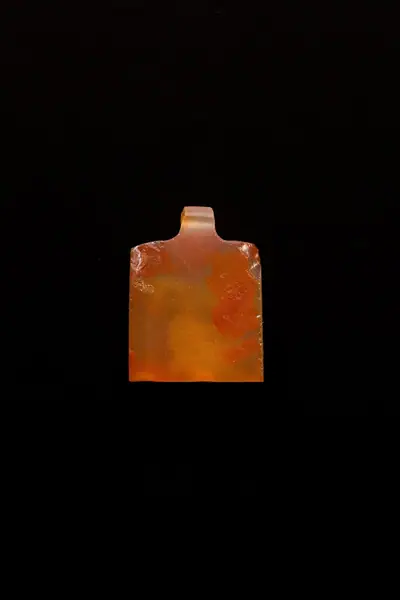 10 Amulets of Henettawy (C): 1 wedjat, 1 scarab, 3 djed pillars, 1 incised plaque, 1 uraeus, 2 wadj signs, and 1 cylindrical beadEgyptian 21st dynasty · circa 990–970 B.C. Period: Third Intermediate Period Dynasty: Dynasty 21
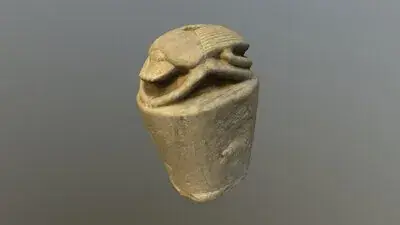 ScarabEgypt · 2018
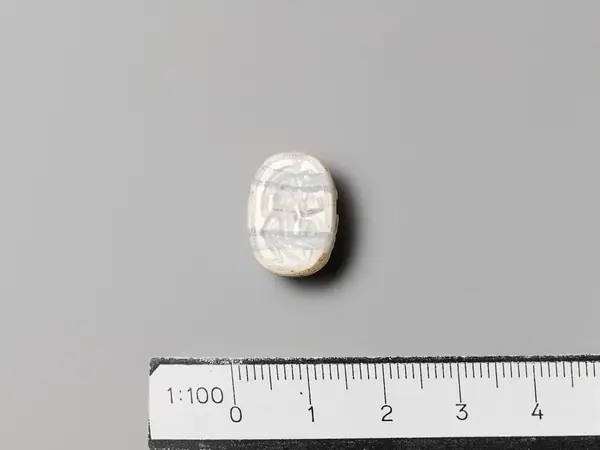 Banded agate scarab3 rd century BC date QS:P571,-250-00-00T00:00:00Z/7
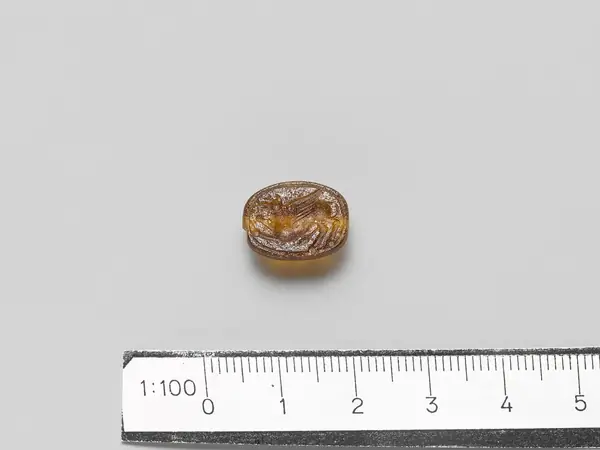 Glass scarab4th century B.C.
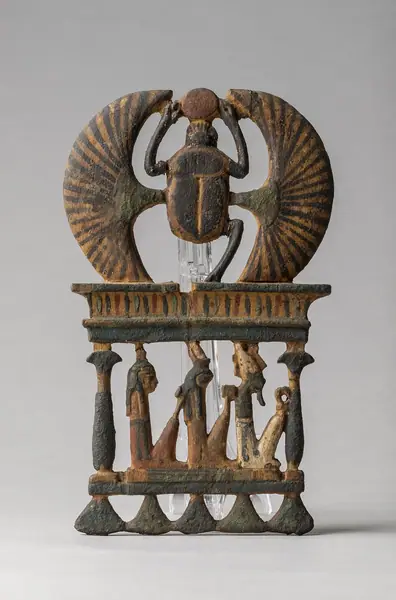 Pectoral picturing a winged scarab and a shrine with the gods Osiris, Horus and Isis title QS:P1476,en:"Pectoral picturing a winged scarab and a shrine with the gods Osiris, Horus and Isis " label QS:between 722 and 332 BC date QS:P,-0500-00-00T00:00:00Z/6,P1319,-0722-00-00T00:00:00Z/9,P1326,-0332-00-00T00:00:00Z/9 Lat
 Bead Shroud of TabakenkhonsuEgyptian 25th dynasty · circa 680–670 B.C. Period: Late Period, Kushite Dynasty: Dynasty 25
 Amulet: Pataikos astride crocodiles and with a scarab on his headEgyptian late period · 664–332 B.C.
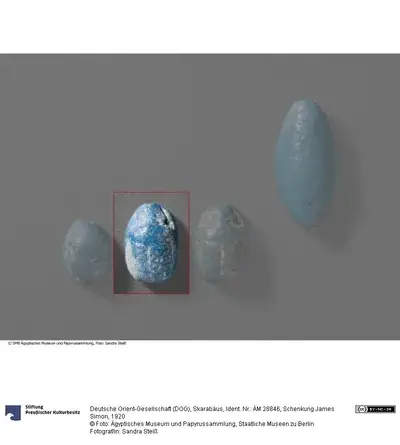 scarabP 47.01 (Amarna)
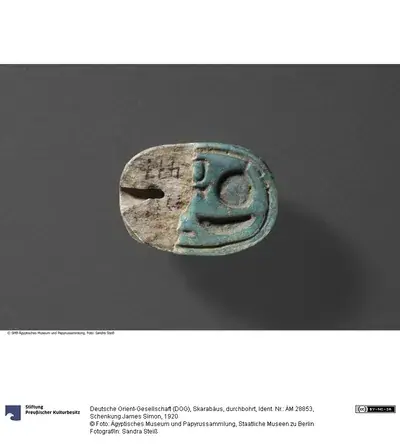 scarabP 47.02 (Amarna)
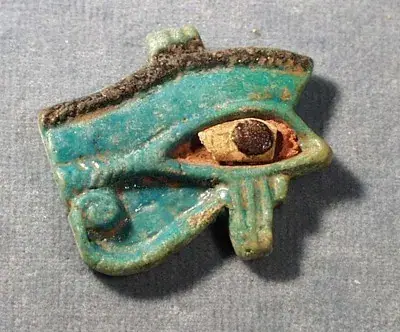 scarab, fish, amen, figurine <eyeVereinigtes Königreich (Entstehung)
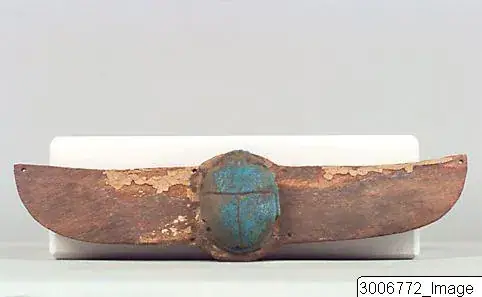 Jewellery, scarab, skarabé amulet from EgyptEgypt
 Scarab, jewellery, skarabé amulet from SudanSudan
 Scarab, skarabé amulet from ThebesThebes
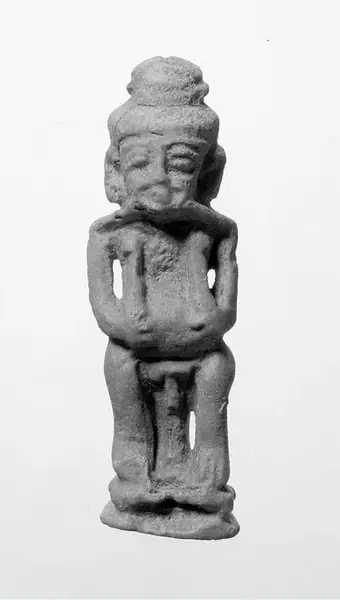 amulet ; godEgypt
 Tutankhamun Pectoral with a scarab beetle 2019Tutankhamun
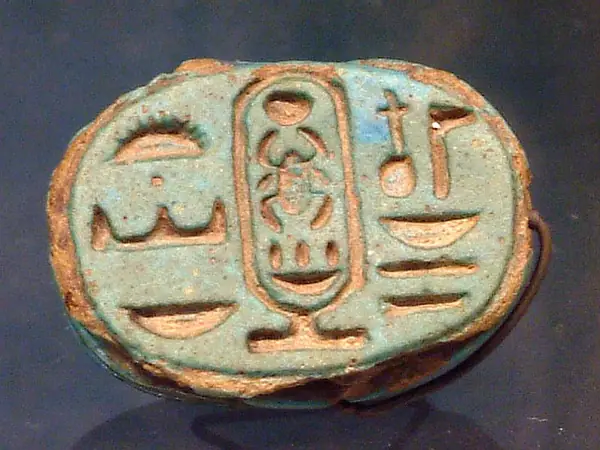 Scarab of king Tut-E 22807-Egypte louvre 148
 Wild Bull Hunt Scarab of Amenhotep IIIEgypt, New Kingdom (1540–1069 BCE), Dynasty 18, reign of Amenhotep III (1390–1352 BCE) · c. 1391–1353 BCE
 ScarabEgypt, Haraga, Wadi I, no number, Second Intermediate period (1648–1540 BCE) · 1980–1900 BCE
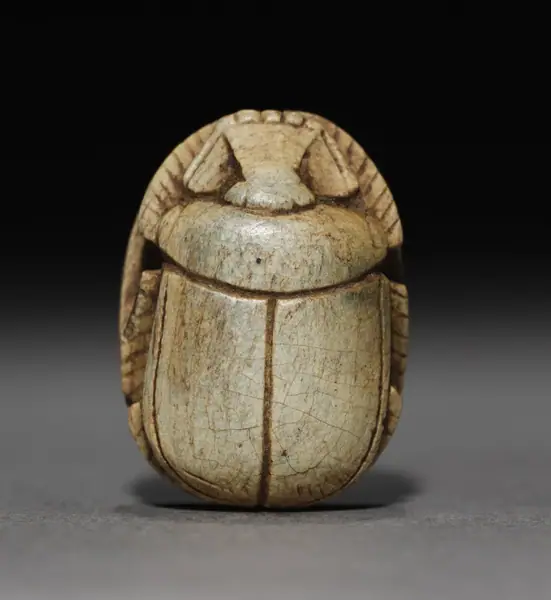 ScarabEgypt, Modern forgery · 1900–1914
 ScarabEgypt, Second Intermediate period (1648–1540 BCE) · 1648–1540 BCE
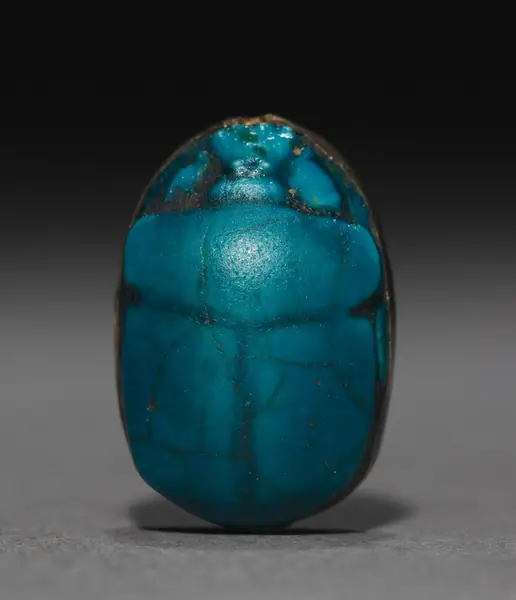 ScarabEgypt, Middle Kingdom (2040–1648 BCE), Dynasties 12–13 · 1980–1648 BCE
 Amenhotep II ScarabEgypt, New Kingdom or modern forgery · 1550–1077 BCE
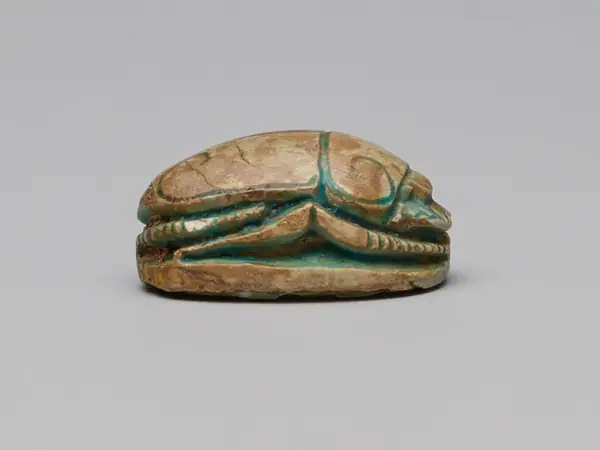 Scarab of SenebtifiEgypt · late Middle Kingdom, about 1850-1650 BCE
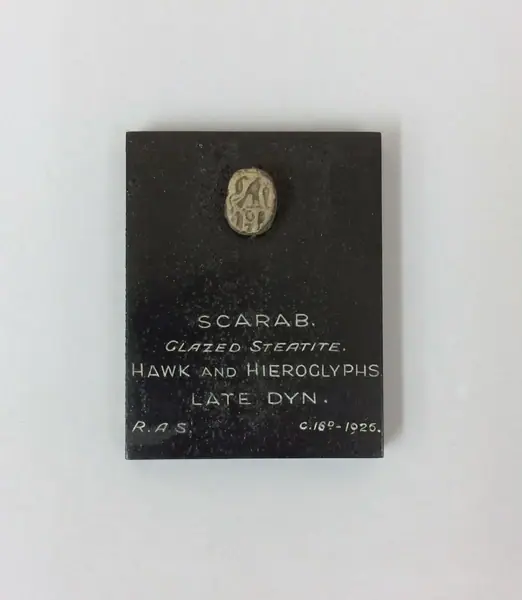 Scarab, buff glazed composition, Egypt, Late PeriodEgypt · 664 BC - 332 BC
 ScarabEgypt · Middle Kingdom, ca. 1981–1950 B.C.
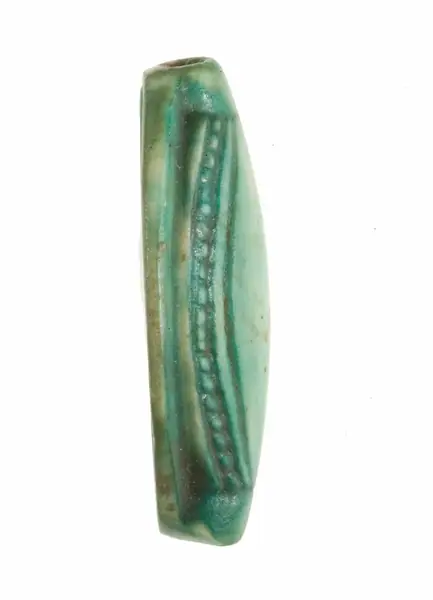 Cowroid Seal Amulet Inscribed with a Decorative PatternHatshepsut · circa 1479 date QS:P571,+1479-00-00T00:00:00Z/9,P1480,Q5727902 –1458 B.C. Period: New Kingdom Dynasty: Dynasty 18, early
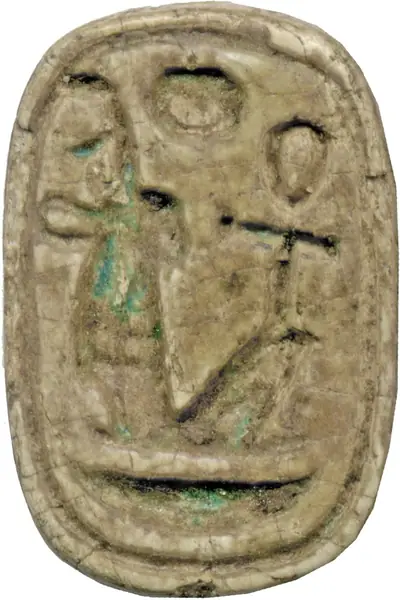 Amulet with the Names of Amenophis III (1388-1351/1350 BC) and Queen TiyeEgyptian New Kingdom · between 1388 and 1351 BC date QS:P571,-1350-00-00T00:00:00Z/7,P1319,-1388-00-00T00:00:00Z/9,P1326,-1351-00-00T00:00:00Z/
 10 Amulets of Henettawy (C): 1 wedjat, 1 scarab, 3 djed pillars, 1 incised plaque, 1 uraeus, 2 wadj signs, and 1 cylindrical beadEgyptian 21st dynasty · circa 990–970 B.C. Period: Third Intermediate Period Dynasty: Dynasty 21
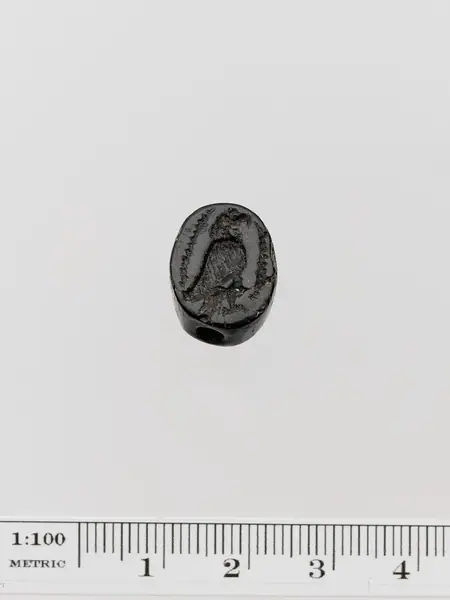 Black jasper scaraboid seal2nd half of the 5th century B.C.
 Transparent glass scaraboidcirca 450–400 B.C.
 Fine nuovo regno-epoca tarda, scarabeo del cuore, in lapislazzuli (fi, museo egizio)
 WLA brooklynmuseum Scarab with Separate Wings ca 712-342 BCEEgyptian late period
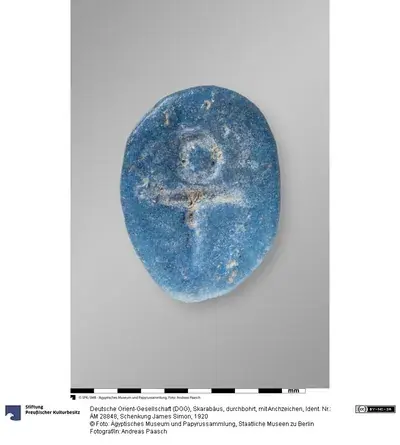 scarabP 47.01 (Amarna)
 Scarab, skarabé amulet from EgyptEgypt
 Amulet@eng, jewellery@eng, scarab@eng, skarabé, jewellery amulet from SudanSudan
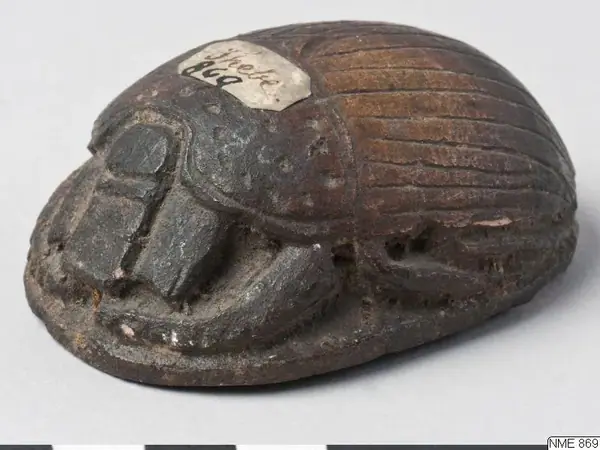 Scarab, skarabé amulet from ThebesThebes
 Bracelet of Tutankhamun 2019aTutankhamun
 ScarabEgypt, New Kingdom (1540–1069 BCE), Dynasty 18 · 1350–1296 BCE
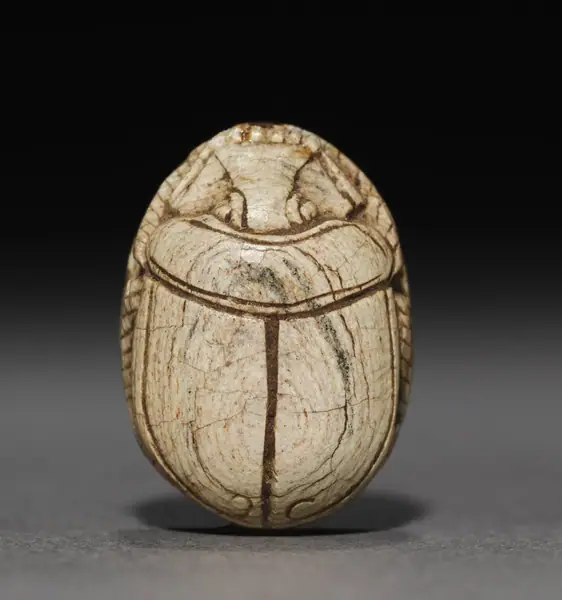 ScarabEgypt, Modern forgery · 1900–1914
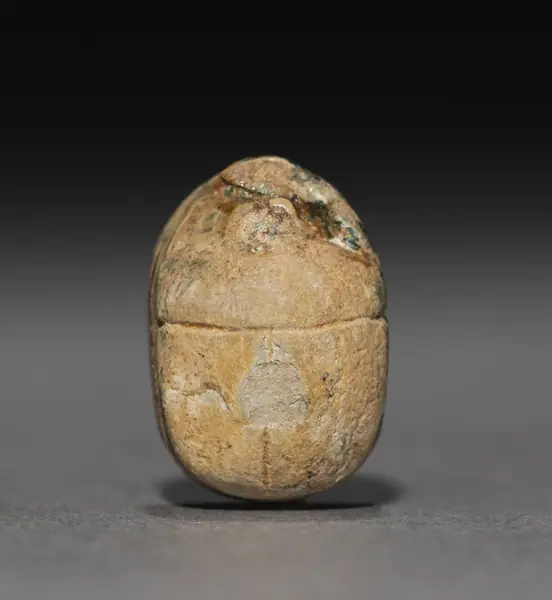 ScarabEgypt, Second Intermediate period (1648–1540 BCE) · 1648–1540 BCE
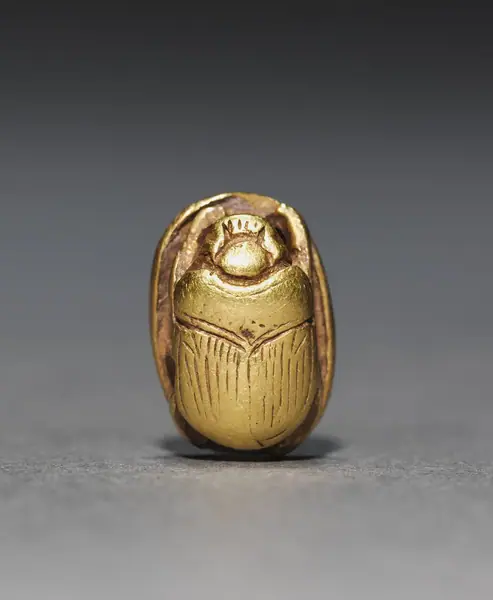 ScarabEgypt, Middle Kingdom (2040–1648 BCE), Dynasty 12 · 1980–1801 BCE
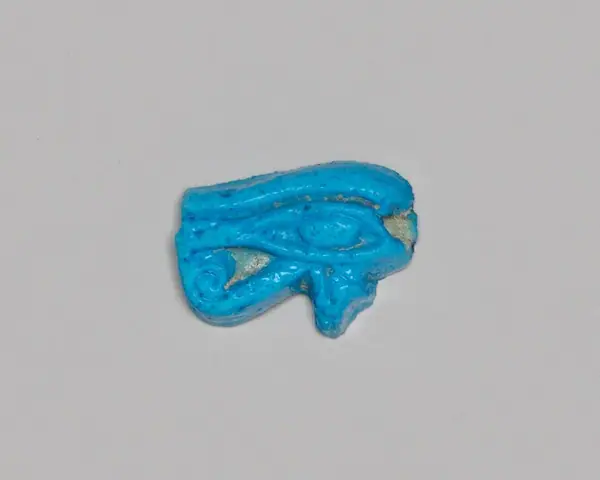 Amulets (string): Eye of Horus, Djed Pillars, ScarabsEgypt · Third Intermediate–Late Period (?) (about 1069–332 BCE)
 Scarab, glazed steatite; Egypt, New KingdomEgypt · c. 1550 BC - c. 1077 BC
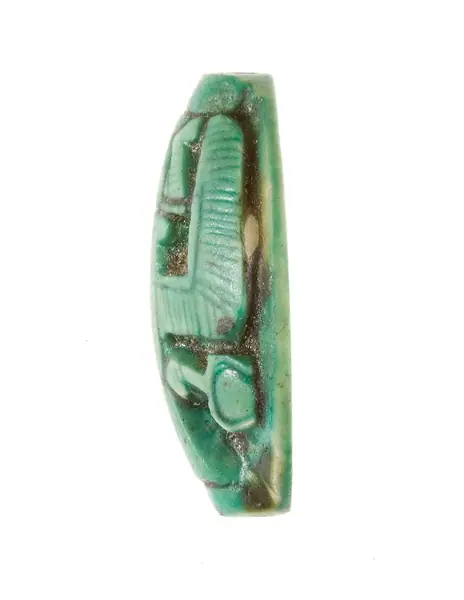 Cowroid Seal Amulet Inscribed with a Hieroglyphic MotifHatshepsut · circa 1479 date QS:P571,+1479-00-00T00:00:00Z/9,P1480,Q5727902 –1458 B.C. Period: New Kingdom Dynasty: Dynasty 18, early
More from Ancient Egypt: Sacred animals · Hands, fists & faces
Every type in the gallery
Anything in the gallery can be made, by hand, in the prescribed metal or yours and, where the tradition names an hour, at that hour or with a plain note that it was not. Numbered. Price on commission, quoted first. I reply within one business day.