IThe Difference, From This Side
My sister site opens with the same argument and makes the case for the passive object. Here is the case for the made one, and it is a harder case, because a talisman asks something of you that an amulet never does: work, timing, and a decision about what you actually want.
An amulet can be found. A hagstone on a beach, a rabbit's foot, a coin from the year you were born — pick it up, pocket it, and it is complete. It asks nothing. It does one thing, which is to stand between you and something bad, and it does that thing passively, forever, without maintenance.
A talisman cannot be found, because a talisman is a manufactured instrument with four requirements, and if any of the four is missing you have an ornament. It must be made of the right substance. It must be made at the right time. It must carry the right figure, derived by a method rather than chosen because it looked good. And it must be made for a stated purpose, which somebody had to be honest enough to state. The word comes through Arabic tilsam from Greek telesma — a completion, a rite performed to the end. The name is the method.
That is why a talisman you find is worthless to you, and why the tradition is unanimous that the strongest one is the one you commissioned or made, for a purpose you were willing to write down. And it is why this site is longer and more technical than its sister. Protection is a feeling. Attraction is engineering.
IIThe Four Requirements
Strip Picatrix, Agrippa, Ficino and the Key of Solomon down to their common skeleton and every one of them insists on the same four things, in the same order.
The Substance
Each planet owns a metal, and the metal is not symbolic — it is the receiver. Gold for the Sun, silver for the Moon, iron for Mars, copper for Venus, tin for Jupiter, lead for Saturn, and for Mercury an alloy, since quicksilver will not hold an engraving. Stones, colours, herbs and animals are assigned the same way. A Venus talisman cut in iron is, in the tradition's own terms, a tuned circuit built with the wrong component.
The Time
The planetary hour, not the clock hour. Divide the daylight into twelve and the night into twelve; the lengths differ with the season. The first hour of Sunday belongs to the Sun, and the rulership then runs Sun, Venus, Mercury, Moon, Saturn, Jupiter, Mars and repeats — the Chaldean order — which is why the week is named as it is. Add the planet's condition in the sky: rising, strong, unafflicted, in its own sign. This is the part everyone skips and it is the part that makes the object a talisman.
The Figure
Derived, never invented. The kamea of the planet; the seal traced upon it; the sigils of its intelligence and its spirit; the divine name under which the thing is issued; the image the book specifies. A figure you designed because it looked occult is a drawing. A figure traced across a magic square by a rule is a derivation, and the next section shows you the rule.
The Intent
Stated, singular, and written. Every grimoire insists that the purpose be spoken or inscribed at the moment of making. This has a plain non-magical virtue as well: it forces the person commissioning to decide what they actually want, in words, which is harder than it sounds and is very often the whole benefit.
IIIThe Engine
Here is the machinery, in the order it is used. None of it is invented by me and all of it can be checked against Agrippa's Book Two, which has been in print continuously since 1533.
The magic squares
Each planet has a square of numbers — a kamea — of order three to nine, running from Saturn's 3×3 up to the Moon's 9×9. Each is a true magic square: every row, every column and both diagonals sum to the same constant. Saturn's is 15; Jupiter's 34; Mars's 65; the Sun's 111; Venus's 175; Mercury's 260; the Moon's 369. The sum of all thirty-six cells of the solar square is 666, which is the reason that number was associated with the Sun for centuries before it acquired its other reputation.
The squares are not decoration and they are not arbitrary. They are the oldest recreational mathematics in the world — China had the 3×3 as the Lo Shu diagram before 600 BC — and they arrived in Europe through Arabic sources already attached to the planets. They are printed correctly below, which is more than can be said for most of what is sold with them stamped on it.
Tracing the seal
This is the step that turns a square into a sigil, and it is the single most useful technique in practical talisman-making. Take a name — of the planet's intelligence, of its spirit, or of a person. Convert each letter to its number. Reduce each number, by subtracting the highest cell value as many times as needed, until it falls inside the square. Find that cell. Draw a line from cell to cell in the order of the letters. Mark the beginning with a small circle and the end with a short bar. What you have drawn is the seal, and it is the exact method by which the sigils on Barrett's plate above were produced.
Do it with your own name and you get a figure that has never existed before, because it is a function of your name and your chosen planet and nothing else. The generator below performs precisely this operation, in your browser, using Agrippa's own Latin letter-values. Nothing is sent anywhere.

IVThe Seven
The whole system rests on seven, because seven is what moves against the fixed stars: five planets plus the Sun and Moon. Everything below is standard from Agrippa onward. The squares are drawn from the source and are arithmetically correct; check them.
| Planet | Metal | Day | Square | Constant | Intelligence | Spirit |
|---|---|---|---|---|---|---|
| ♄ Saturn | Lead | Saturday | 3×3 | 15 | Agiel | Zazel |
| ♃ Jupiter | Tin | Thursday | 4×4 | 34 | Iophiel | Hismael |
| ♂ Mars | Iron | Tuesday | 5×5 | 65 | Graphiel | Barzabel |
| ☉ The Sun | Gold | Sunday | 6×6 | 111 | Nakhiel | Sorath |
| ♀ Venus | Copper | Friday | 7×7 | 175 | Hagiel | Kedemel |
| ☿ Mercury | Quicksilver, or an alloy | Wednesday | 8×8 | 260 | Tiriel | Taphthartharath |
| ☽ The Moon | Silver | Monday | 9×9 | 369 | Malkah be-Tarshishim | Shad Barshemoth |
Saturn
3 × 3Endings, boundaries, patience, land and buildings, binding, the long defence, the debt finally paid. The slowest and most permanent of the seven, and the one to use when you want something to stop rather than to start.
- Metal
- Lead
- Day
- Saturday
- Square
- 3×3, order 3
- Constant
- every row, column and diagonal sums to 15
- Sum of all
- 45
- Intelligence
- Agiel
- Spirit
- Zazel
Jupiter
4 × 4Increase, wealth, favour from those above you, law, judges, expansion, generosity, reputation. The traditional talisman of gain, and the one most often cut for a business or a case at law.
- Metal
- Tin
- Day
- Thursday
- Square
- 4×4, order 4
- Constant
- every row, column and diagonal sums to 34
- Sum of all
- 136
- Intelligence
- Iophiel
- Spirit
- Hismael
Mars
5 × 5Courage, conflict, surgery, victory, the removal of an obstacle by force, protection of soldiers. Sharp and quick and not to be worn continually; the old books all warn about it and they are right.
- Metal
- Iron
- Day
- Tuesday
- Square
- 5×5, order 5
- Constant
- every row, column and diagonal sums to 65
- Sum of all
- 325
- Intelligence
- Graphiel
- Spirit
- Barzabel
The Sun
6 × 6Health, authority, honour, the favour of the powerful, success in the visible world, the restoration of vitality. Its square of thirty-six cells sums to 666, which is why that number was a solar number for a thousand years before it was anything else.
- Metal
- Gold
- Day
- Sunday
- Square
- 6×6, order 6
- Constant
- every row, column and diagonal sums to 111
- Sum of all
- 666
- Intelligence
- Nakhiel
- Spirit
- Sorath
Venus
7 × 7Love, friendship, reconciliation, art, music, beauty, fertility, pleasure. The talisman most often asked for and the one where intent most needs to be written down honestly.
- Metal
- Copper
- Day
- Friday
- Square
- 7×7, order 7
- Constant
- every row, column and diagonal sums to 175
- Sum of all
- 1225
- Intelligence
- Hagiel
- Spirit
- Kedemel
Mercury
8 × 8Speech, writing, trade, learning, examinations, messages, negotiation, travel, sleight of any kind. The scholar's and the merchant's talisman.
- Metal
- Quicksilver, or an alloy
- Day
- Wednesday
- Square
- 8×8, order 8
- Constant
- every row, column and diagonal sums to 260
- Sum of all
- 2080
- Intelligence
- Tiriel
- Spirit
- Taphthartharath
The Moon
9 × 9Dreams, the tides, journeys by water, the household, the mother, secrets, and everything that waxes and wanes. The fastest of the seven and the shortest-lived.
- Metal
- Silver
- Day
- Monday
- Square
- 9×9, order 9
- Constant
- every row, column and diagonal sums to 369
- Sum of all
- 3321
- Intelligence
- Malkah be-Tarshishim
- Spirit
- Shad Barshemoth

VYour Sigil
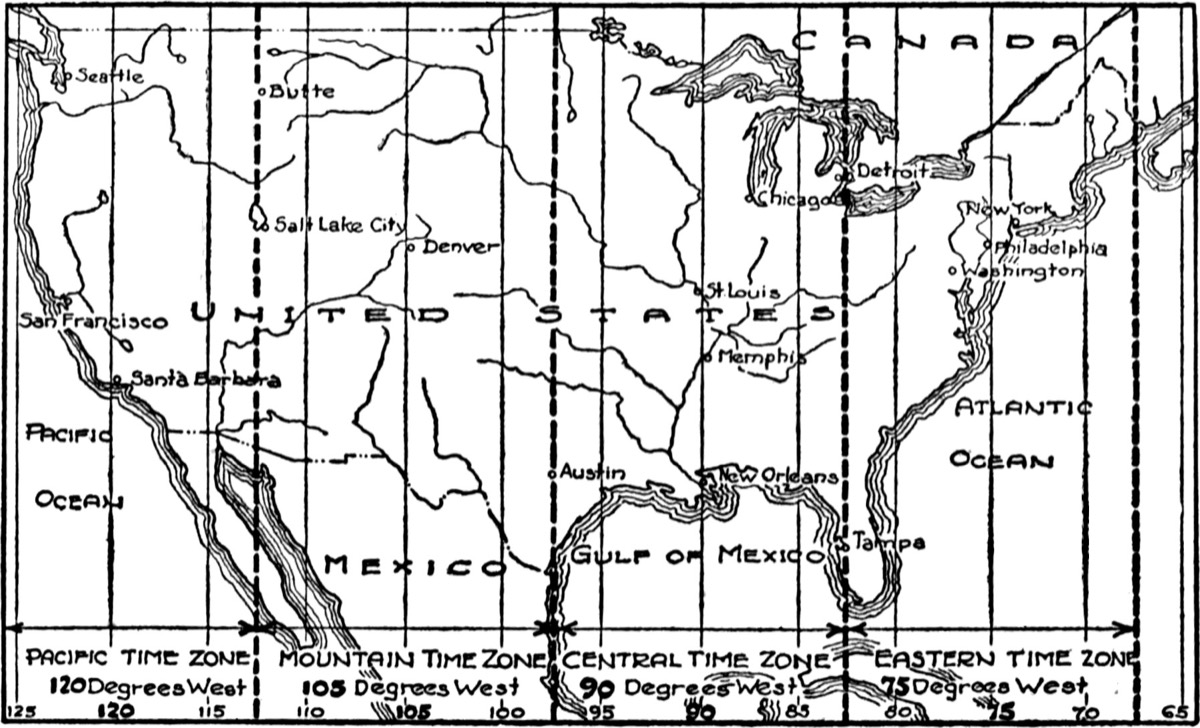
Type a name. Choose a planet. The page will convert the letters by Agrippa's table, reduce them onto that planet's square, and trace the path. This runs entirely in your browser; nothing is transmitted, stored or seen by me.
Agrippa's Latin values: a1 b2 c3 d4 e5 f6 g7 h8 i9 k10 l20 m30 n40 o50 p60 q70 r80 s90 t100 v200 x300 y400 z500 j600 u700 w900.
VIThe Books
There is a single chain of transmission, and it is unusually easy to trace because each link copies the last almost verbatim. Two thousand years, eight books, one method.

The Greek Magical Papyri
2nd c. BC – 5th c. AD, EgyptA rubbish heap of working papers from Greco-Roman Egypt: the actual notebooks of practising magicians, in Greek, Demotic and Coptic, mixing Egyptian gods, Jewish divine names, Homeric verses and pure nonsense syllables. They are the oldest detailed instructions I have for making a charged object, and they read exactly like a recipe book — take a lodestone, engrave upon it Aphrodite riding, then a name, then wear it. Everything after this is a refinement.

Picatrix (Ghāyat al-Ḥakīm)
c. 1000, al-Andalus / Egypt'The Aim of the Sage', compiled in Arabic and translated into Castilian and Latin for Alfonso the Wise in 1256. It is the single most important talismanic book in history and almost nobody outside the field has heard of it. Its doctrine is that the heavens pour a continuous influence downward, that matter receives it according to its nature, and that a talisman is simply a matched receiver: the right substance, cut at the right celestial moment, engraved with the right image. Every European talisman for the next six hundred years is downstream of it.

The Key of Solomon (Clavicula Salomonis)
Manuscripts 14th–18th c.The most copied grimoire in Europe, attributed to Solomon and actually a Renaissance compilation from Greek, Latin, Italian and Hebrew sources. It gives the forty-four Pentacles — circular figures, seven for each planet, drawn in the correct colour on virgin parchment in the correct hour — and, crucially, it gives the preparation: the fasting, the bathing, the clean linen, the knife with the white handle, the exact form of words. Mathers printed it in English in 1888 and the plates on this page are his.

Agrippa, Three Books of Occult Philosophy
1533, CologneHeinrich Cornelius Agrippa was twenty-three when he drafted it and it is the encyclopaedia of the whole system: the four elements, the correspondences of every plant and stone and animal to every planet, the magic squares with their Hebrew equivalents, the seals of the intelligences and spirits, the scales of the numbers, the magical alphabets. Book Two is where the planetary squares enter European print. Everything in the next section of this page is, in the end, Agrippa's Book Two.

Ficino, De Vita Coelitus Comparanda
1489, FlorenceThe respectable version. Marsilio Ficino, priest, physician and translator of Plato for the Medici, wrote a book of medical astrology arguing that images and music could draw down planetary influence for health, and spent the rest of it nervously explaining that he was not doing magic. He was doing magic. His defence — that the influence is natural, like a magnet's, and not demonic — is the argument that made talismans survivable in Christian Europe.
Paracelsus
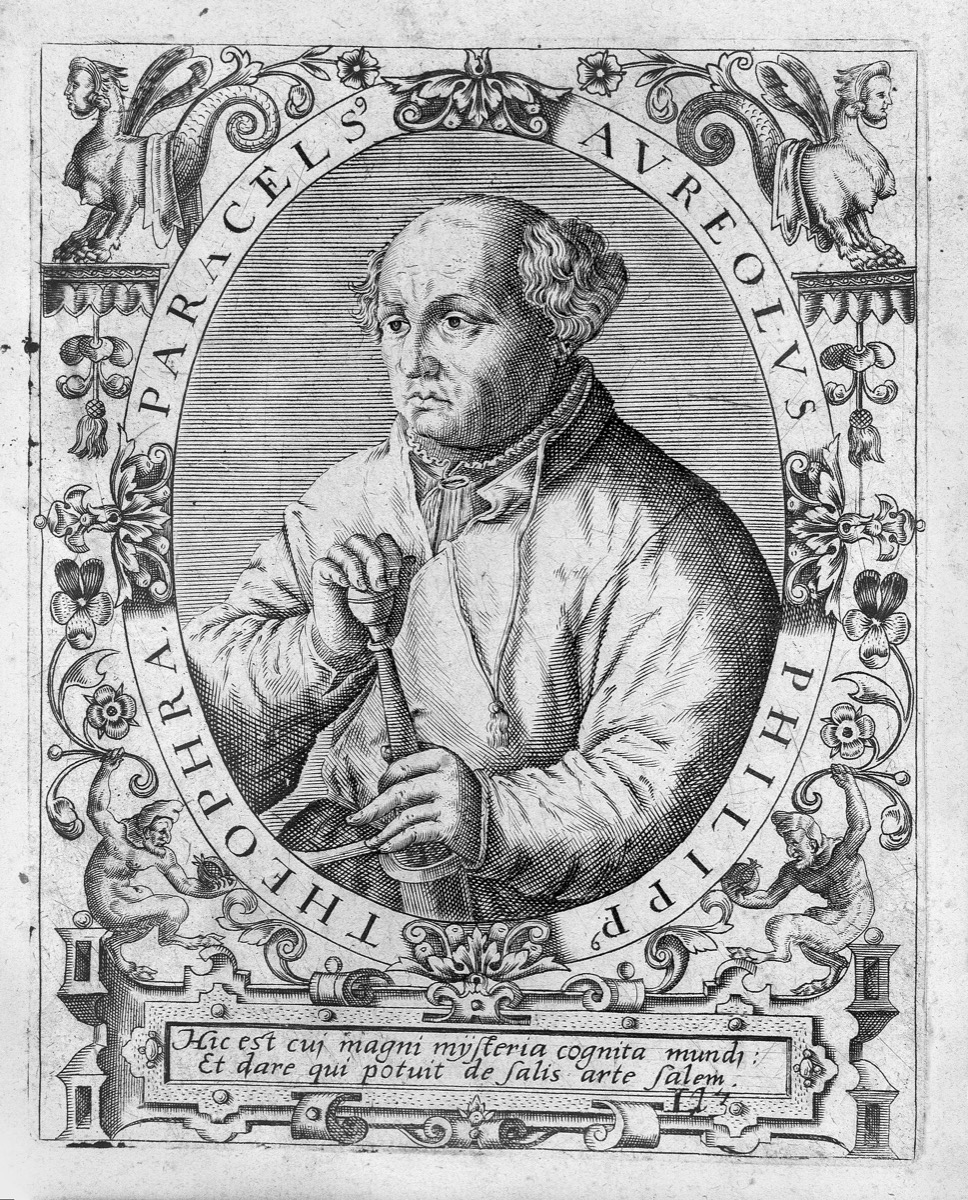
1493–1541The physician who put talismans into medicine on purpose: metal discs cast under the right sign for specific diseases, worn against the skin. His system is where the planetary metals become fixed for good in the European mind — gold for the sun and the heart, silver for the moon and the brain, iron for Mars and the gall, tin for Jupiter and the liver, copper for Venus and the kidneys, lead for Saturn and the spleen, mercury for Mercury and the lungs.

Dee's Sigillum Dei Aemeth
1580s, EnglandJohn Dee's wax seal, nine inches across, carved with a heptagram, a heptagon, the names of seven angels and a great deal of arithmetic derived from the letters. Four small copies supported the legs of his table and one held the shew-stone. It is the high-water mark of the made object in England: not worn, not carried, but built as a piece of furniture for talking to angels.

Barrett, The Magus
1801, LondonFrancis Barrett was a shabby London occultist who essentially plagiarised Agrippa and the Heptameron into English, added coloured plates of demon portraits, and advertised for students. It should have been a footnote. Instead its plates — the magic squares, the seals of the planetary spirits, the magical alphabets, the talismans — became the visual vocabulary of every occult revival since, straight through the Golden Dawn to the present. Half of what people picture when they hear the word 'talisman' is a Barrett plate.
VIIThe Pentacles of Solomon
The Key of Solomon gives forty-four circular figures, seven for each planet plus two, each with a stated purpose, a verse of scripture around the rim, and instructions for the colour and hour. They are the best-known talismanic figures in the world and are reproduced constantly with no idea what any of them is for. Here is the plate series, and a note on what these actually claim to do.
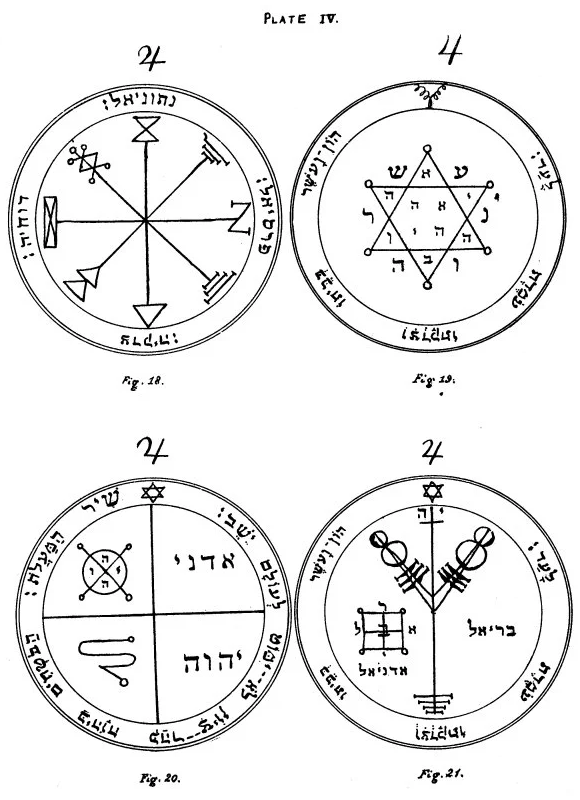


Two honest observations. First, the Key of Solomon's own instructions are far more demanding than the figures suggest: the parchment must be virgin, the ink prepared, the operator fasted and bathed, the day and hour correct, and the whole thing consecrated with a named ritual. A pentacle printed on a card and sold in a shop has met none of its own requirements, and by the book's own standard is inert. Second, several of these figures are explicitly for harm — Saturn's second is for ruin, its third summons the demons of Saturn — and the book says so plainly. I make the ones that build. I do not cut the ones that break, and I will tell you which is which.
VIIIWords of Power
Before the squares, and alongside them for two thousand years, ran the other technology: the word that works by being written rather than by being read.
SATOR AREPO TENET OPERA ROTAS
The most famous word-square in the world, found scratched on a wall in Pompeii before AD 79 and therefore older than any Christian reading of it. Five words of five letters, reading the same across, down, backwards and upwards. It rearranges into PATERNOSTER twice, in a cross, with A and O left over — alpha and omega — which is either a stunning piece of design or a stunning coincidence, and the scholarship has never settled it. It was used for fifteen hundred years against fire, fever, madness, and difficult childbirth, cut into walls from Cirencester to Ethiopia.

ABRACADABRA
First recorded by Serenus Sammonicus, physician to Caracalla, around AD 200, as a cure for fever: write it on parchment in eleven lines, each line dropping one letter, so the word tapers to a point, and hang it round the neck. The shape is the mechanism — the disease is supposed to dwindle as the word does. It is the earliest surviving example in the West of a talisman whose power is explicitly its geometry rather than its meaning.

The Divine Names
AGLA, an abbreviation of 'Atah Gibor Le-olam Adonai', Thou art mighty forever, O Lord. The Tetragrammaton, the four-letter name. EL, ELOHIM, SHADDAI. ADONAI. The seventy-two three-letter names derived from three verses of Exodus. On a talisman these are not decoration and they are not addressed to the wearer: they are the authority under which the thing is issued, exactly as a seal on a warrant is.

ABRAXAS
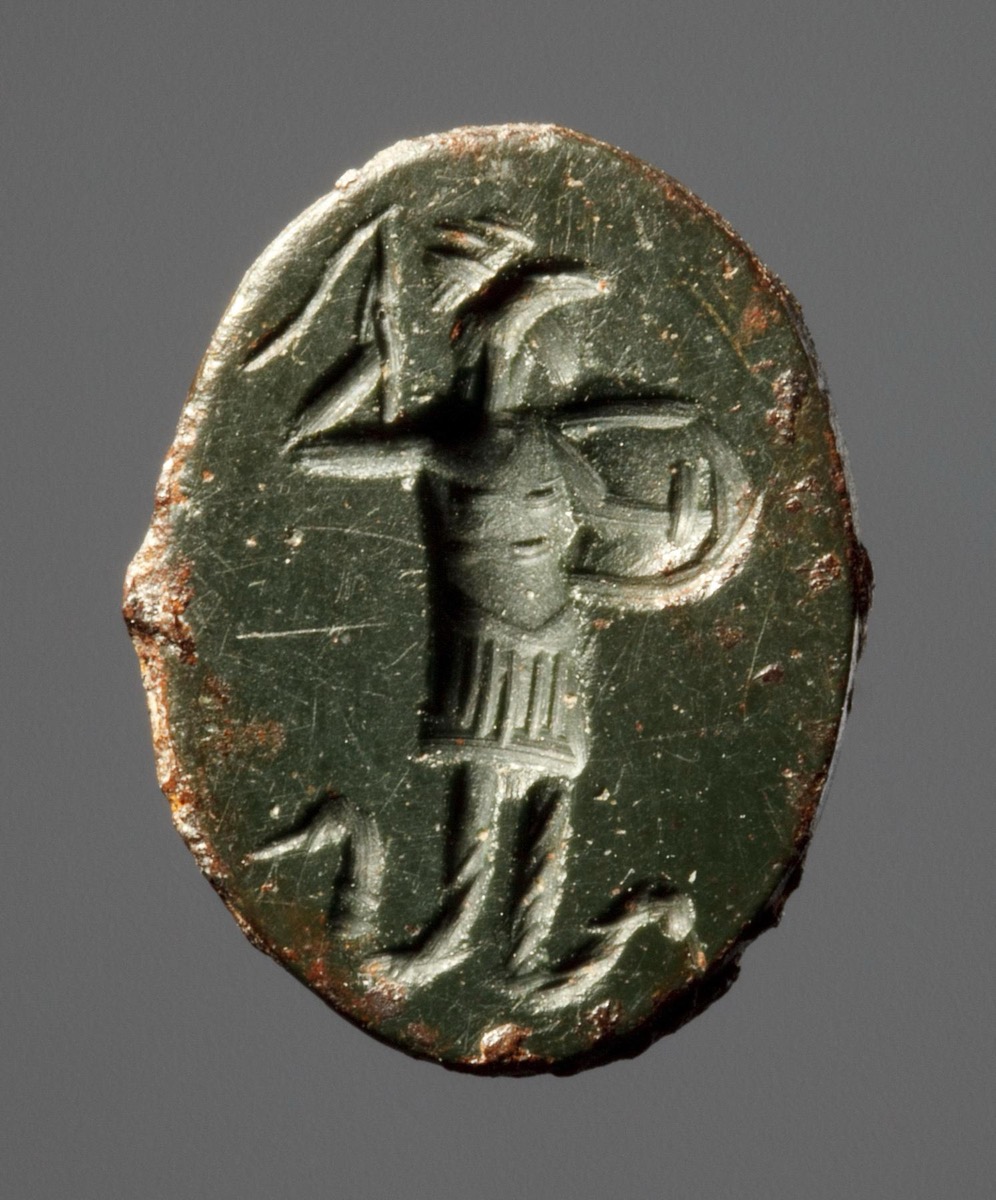
A name found on hundreds of engraved gems from Roman Egypt, usually beside a figure with a cockerel's head, a man's body and two serpents for legs, holding a whip and a shield. Its Greek letters add to 365. The Gnostics used it for the ruler of the year and its 365 heavens; the gems were worn as protection and are the direct physical link between the Greek papyri and the medieval seal.
IXThe Northern Staves
Iceland produced its own tradition of drawn talismans, the galdrastafir, recorded in manuscripts from the seventeenth century onward. They deserve their own note here for one reason: they are almost universally mislabelled as Viking, and they are not.

Vegvísir
'That which shows the way'. Eight staves radiating from a centre. Recorded in Icelandic manuscripts of the nineteenth century with the promise that he who carries it will not lose his way in storms or bad weather, even when the way is not known. Genuinely Icelandic, genuinely a talisman, and genuinely not Viking — the manuscripts are four hundred years after the Norse period, a distinction the tattoo trade never makes and I always will.

Ægishjálmur
'The helm of awe'. Eight tridents around a centre, to be pressed in lead on the forehead between the eyes before meeting an enemy, so that he is filled with fear. The name is older than the stave — the helm of awe is in the Poetic Edda and the Völsunga saga, worn by the dragon Fáfnir — but the drawn figure, again, is from the later grimoires.
The Norse period ends around 1100. The stave manuscripts — the Galdrabók, the Huld manuscript of 1860, and their relatives — are four to eight centuries later, written by Icelanders who were Christian, literate, and drawing on European grimoire tradition as much as anything native. That does not make the staves fake; it makes them early modern Icelandic folk magic, which is a real and interesting thing, and it means anyone selling you a Vegvísir as a Viking symbol either does not know or is not telling. I will cut you one. I will also put the actual date on the certificate.
XThe Alphabets of the Angels
Every classical talisman carries writing, and almost none of it is in a script you can read. That is deliberate. The books hold that the names of God and of the angels are more potent in the letters in which they were first given, and they supply those letters. Here they are, with their sources, because a name cut in a script the cutter cannot read is a name cut wrong.

The Theban alphabet
First printed by Trithemius in the Polygraphia of 1518 and credited by him to 'Honorius of Thebes', a figure nobody has ever found. Agrippa reprinted it in 1533 and Barrett copied Agrippa. It is a simple one-for-one cipher of the Latin alphabet, and it is the script most engraved on talismans today, because modern witchcraft adopted it in the 1950s as its 'witches' alphabet'.

Malachim, 'the angelic'
One of three scripts Agrippa gives in Book III, chapter 30, all of them derived — he says — from the Hebrew letters by drawing lines between stars. Malachim is the one with the little circles at the ends of every stroke, the marks that later engravers called 'the eyes'. Used for the names of angels on the pentacles.
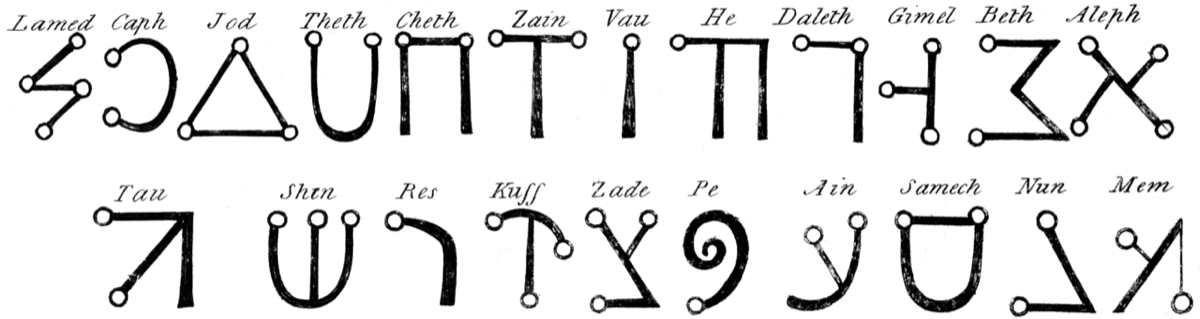
Celestial writing
The second of Agrippa's three. The name means exactly what it says: he presents it as the script in which the heavens themselves are written, the letters being constellations. It is in fact a stylisation of the Hebrew square script, and reads as Hebrew once you know that.

Passing the River
The third, said to have been carried by the Jews out of Babylon. Angular, with the same star-like terminals. On a talisman these three scripts are used interchangeably for the divine and angelic names, and the choice between them is a matter of the maker's tradition rather than of any rule in the books.

The magical alphabets together
Barrett's composite plate, showing the three scripts and their Hebrew equivalents side by side. Every letter on every classical talisman can be read off this page.

The 'Egyptian' and Hebrew alphabets
Barrett's 'Egyptian' letters are pure invention — hieroglyphs were not deciphered until Champollion in 1822 — but the Hebrew column is genuine and is the one that matters, because the numerical values of these twenty-two letters are what every name-sigil and every gematria on this site is built from.

The characters of good and evil spirits
Not an alphabet but a vocabulary: the strokes, hooks and crosses out of which, Agrippa says, the seals of spirits are compounded, each element with a meaning. A seal is therefore not a picture but a sentence.
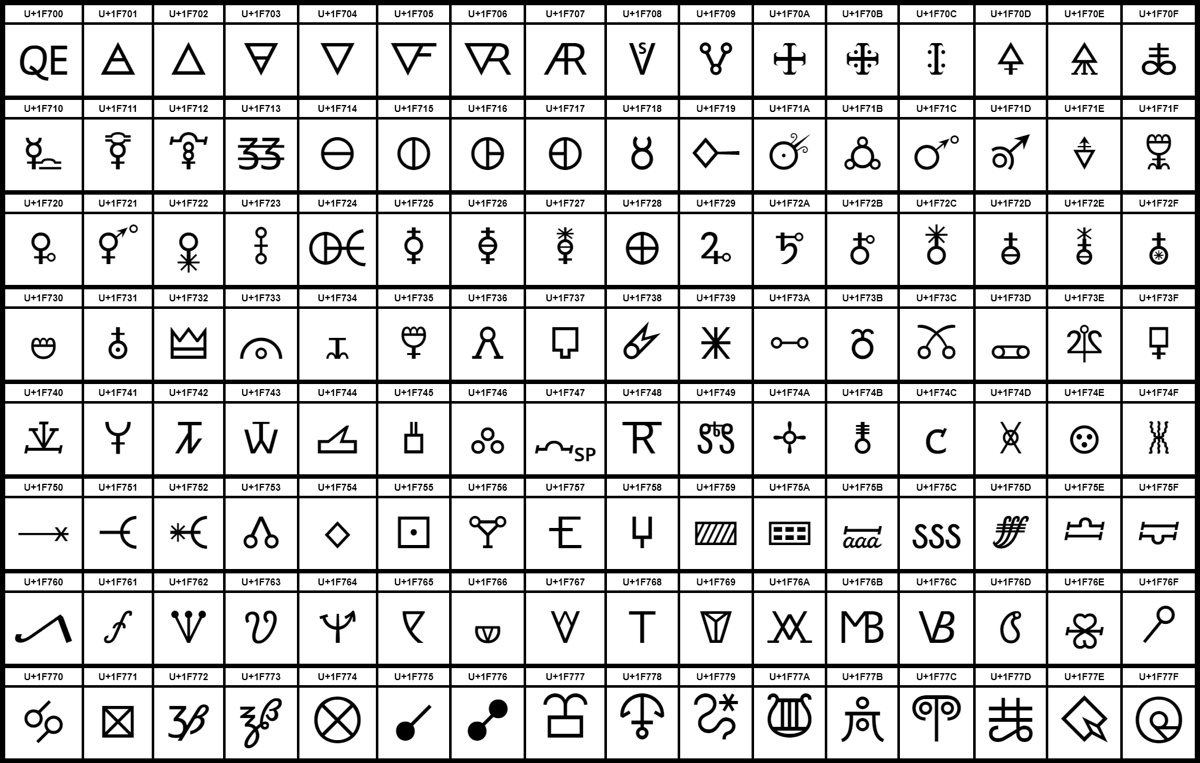
The alchemical characters
The signs of the metals, the planets, the processes and the elements as used in the laboratories. A talisman cut in the planet's metal carries the planet's sign, and the sign is the same one the alchemist used for that metal, because for him the metal and the planet were one substance in two places.
XIThe Gnostic Gems
In 1657 the Antwerp antiquary Jean Chifflet published the first catalogue of a class of objects that had been turning up in Roman graves and Egyptian sand for a century: small engraved stones, haematite and jasper mostly, cut with a figure that has a cock's head, a man's body and two serpents for legs, and with the name ABRASAX or ABRAXAS beside it. He called the book Abraxas seu Apistopistus — 'Abraxas, or the faithful-faithless' — and these are his plates.


The gems are the bridge between the Greek Magical Papyri and everything after. They are the papyri's recipes executed in stone: the seven vowels for the seven planets, the name IAO for the Jewish God, Chnoubis the lion-headed serpent for the stomach, Harpocrates for silence. ABRAXAS in Greek letters adds to 365 — Α1 Β2 Ρ100 Α1 Ξ60 Α1 Σ200 — the days of the year, and the Gnostic teacher Basilides, in second-century Alexandria, made it the name of the ruler of the 365 heavens. Whether the gems are 'Gnostic' in his sense or simply magical in the general sense is argued; that they were cut to a system, in a chosen stone, with a name whose number mattered, is not. They are talismans by the definition at the top of this page, and they are the oldest ones that survive in quantity.
XIIThe Circle and the Seal
Two figures run through every grimoire, and the difference between them is the difference between this site and its sister. The circle is drawn around the operator and is entirely defensive — it is an amulet you stand in. The seal is cut for the spirit and is entirely active — it compels. A talisman for a purpose is a seal turned toward the world instead of toward a spirit; the method is the same.
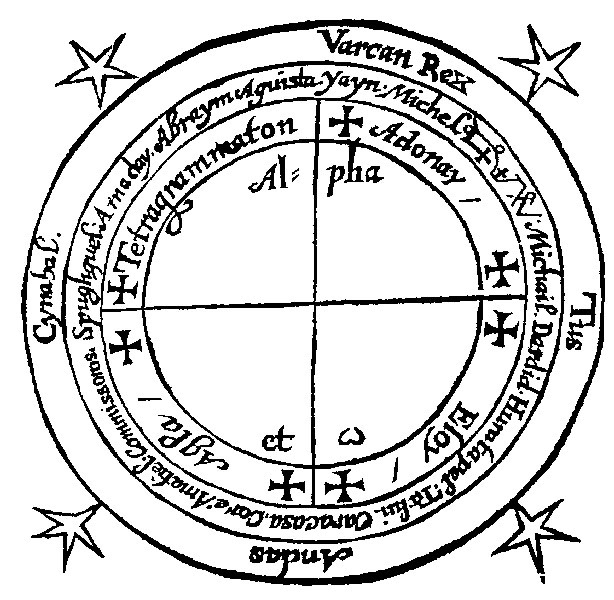
The circle of the Heptameron
Attributed to Pietro d'Abano, who died in 1316; printed with Agrippa's works in 1559. Around the rim the names of the hour, the season, the angels of the day and the sign, all of which change, so that the circle must be drawn fresh for every operation. It protects the operator. It is the amulet inside the talismanic rite.

Barrett's magic circle, 1801
The Heptameron circle copied into English, with the names of God in the quarters. Note that nothing in it is directed outward: every word is a name of protection.
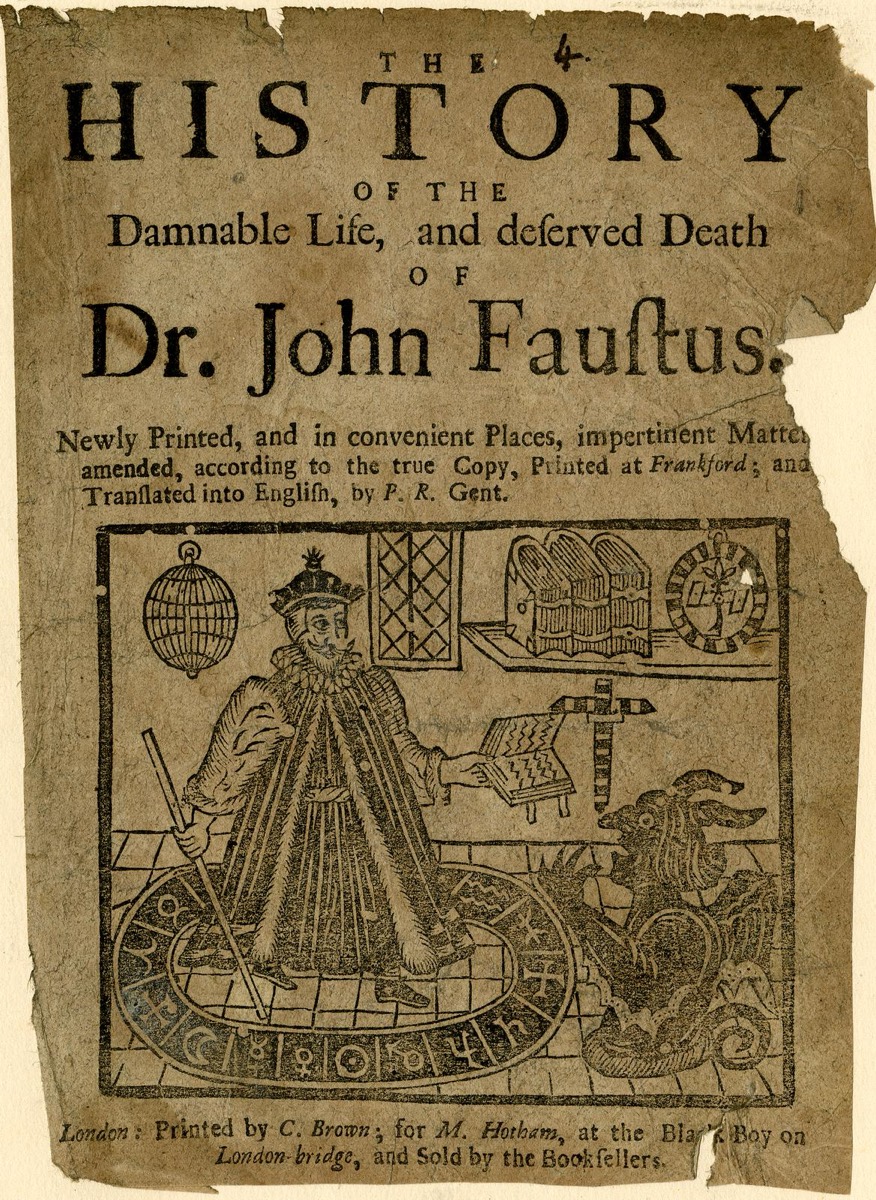
Faustus in his circle
Title page of an English chapbook of the Damnable Life and Deserved Death of Doctor John Faustus, the story that first reached England in 1592. The doctor stands inside a circle of characters, and Mephistopheles rises outside it. The picture is a cartoon of the whole system: the circle keeps what is called from what calls it.

The Magic Circle, John William Waterhouse, 1886
The Victorian idea of the same thing, and one of the most reproduced paintings of the age. She draws the circle with a wand; the ravens and the toad stay outside it. Tate.

Magical circles and seals of Solomon
From a nineteenth-century English manuscript in the Wellcome Collection: a hexagram with the names of God in Hebrew at the points, and a circle of letters. The hexagram used this way is what the books mean by the 'Seal of Solomon'; it is a constraining figure, drawn or engraved so that a spirit may not pass it.

A magical seal of Solomon
From the same manuscript. These figures were copied by hand from grimoire to grimoire for three centuries, and every copy drifted; the drift is itself a record of who read what.
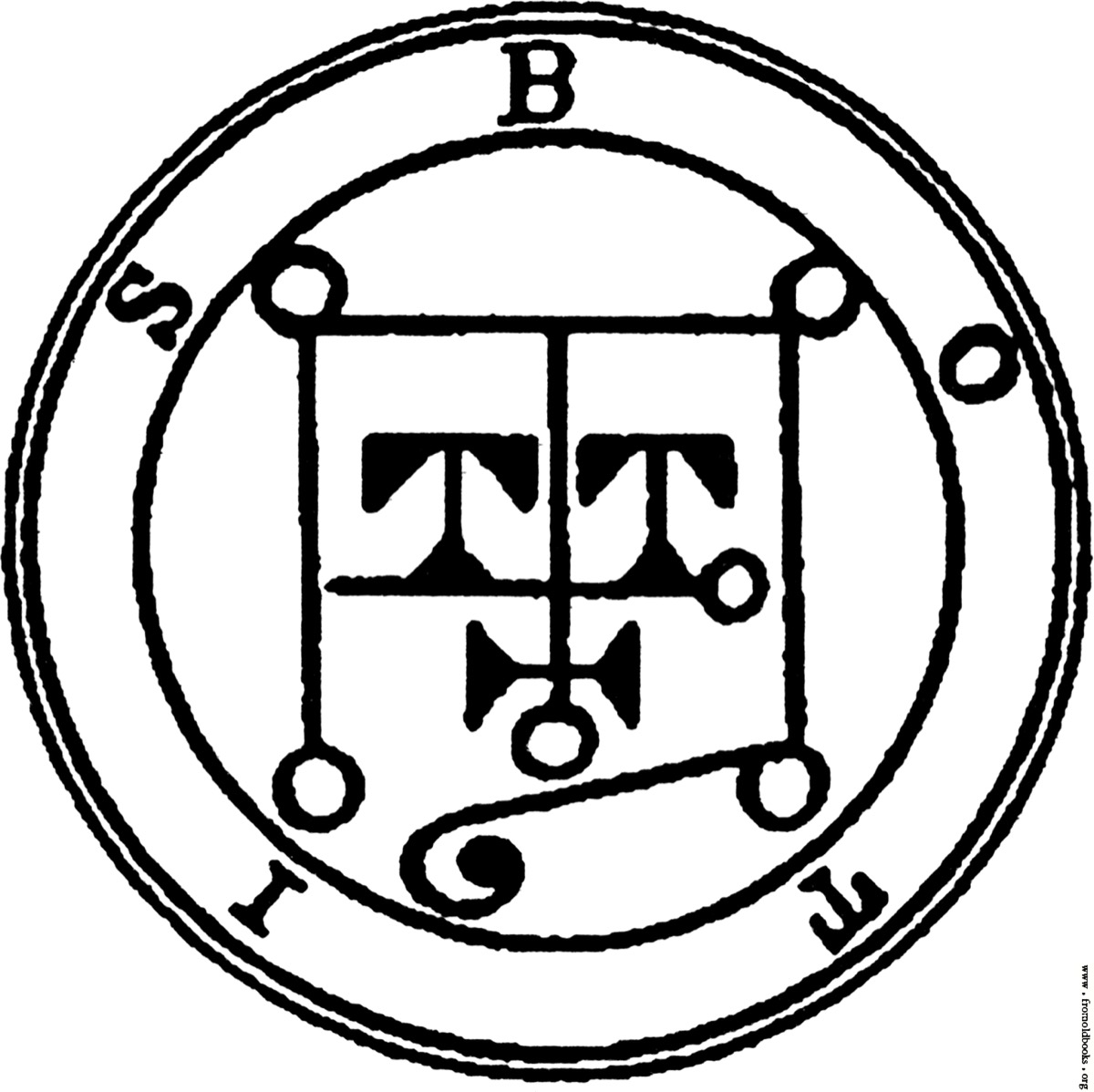
The seal of Botis, from the Goetia
The Lesser Key of Solomon, compiled in the seventeenth century from older sources, gives seventy-two spirits, each with a rank, an office, and a seal. Botis is the seventeenth, a great president and earl, who 'telleth all things past and to come, and reconcileth friends and foes'. The seal is worn on a lamen on the chest 'or else the spirit will not obey'. This is the seal as leash.

The seals of the Goetia
A sheet of the seventy-two, as they appear in the printed editions. Every one is a compound of the characters shown in the alphabet section above; none is a picture.

From a Cyprianus, eighteenth century
The Scandinavian 'black books' were attributed to Saint Cyprian of Antioch, a magician turned bishop, and passed from hand to hand in Denmark and Norway as practical grimoires for farmers and soldiers: charms for cattle, for wounds, for thieves. This page, a dragon devouring a lizard inside a wreath of names, is from one in the Wellcome Collection. The books were real objects of fear; owning one could get you hanged.
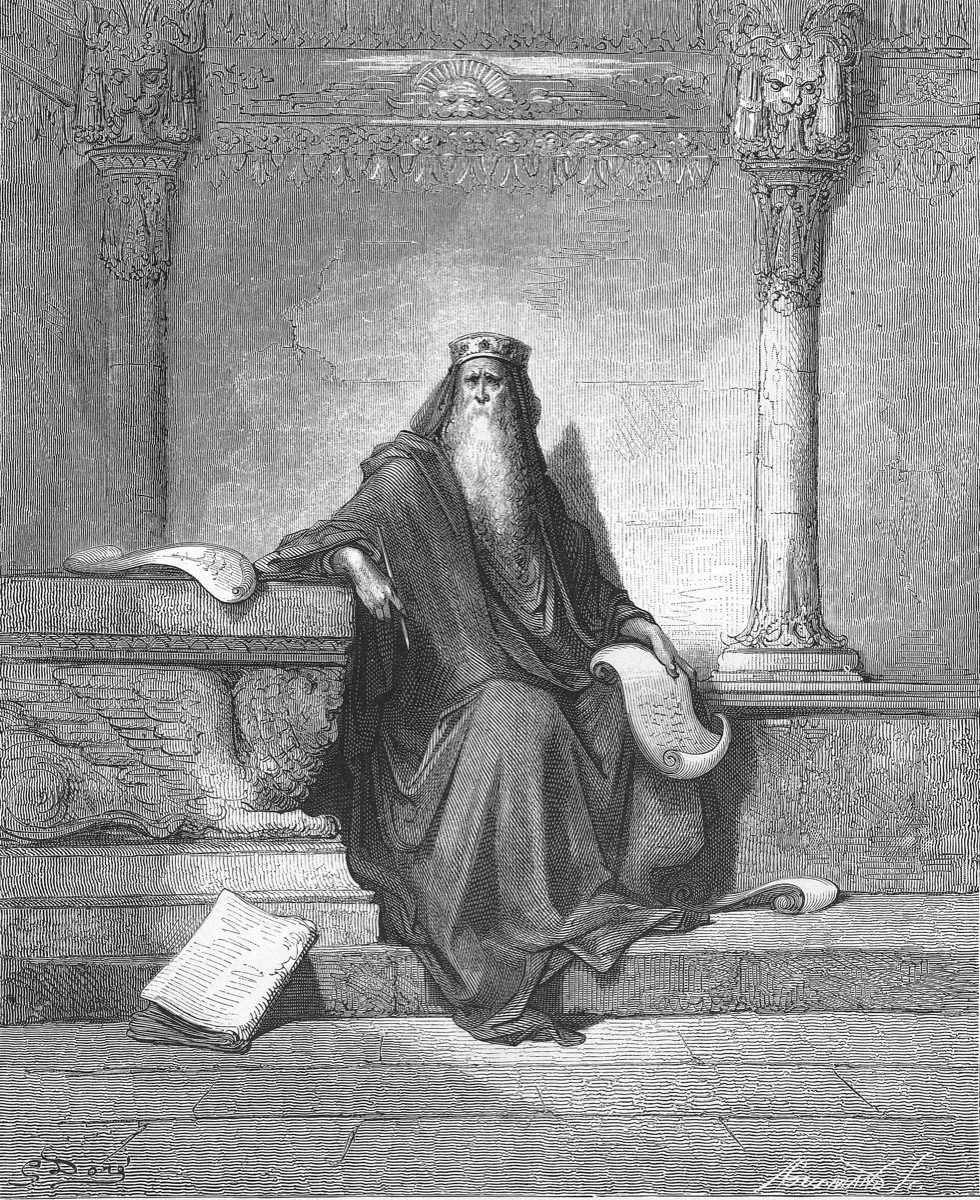
Solomon
The name over all of it. Josephus, in the first century, already reports that Solomon left incantations by which demons were driven out, and that he had seen a Jew named Eleazar do it before Vespasian with a ring. Every 'Key', 'Seal', 'Ring' and 'Testament' of Solomon descends from that one paragraph, and from the Quran's account of the king who commanded the jinn.
XIIILead and Gold
The ancient world made two kinds of inscribed metal sheet with the same tools, in the same workshops, sometimes by the same hand. The lead ones cursed. The gold ones protected. The metal was the message, and this is the root of the whole doctrine of planetary metals that comes later.
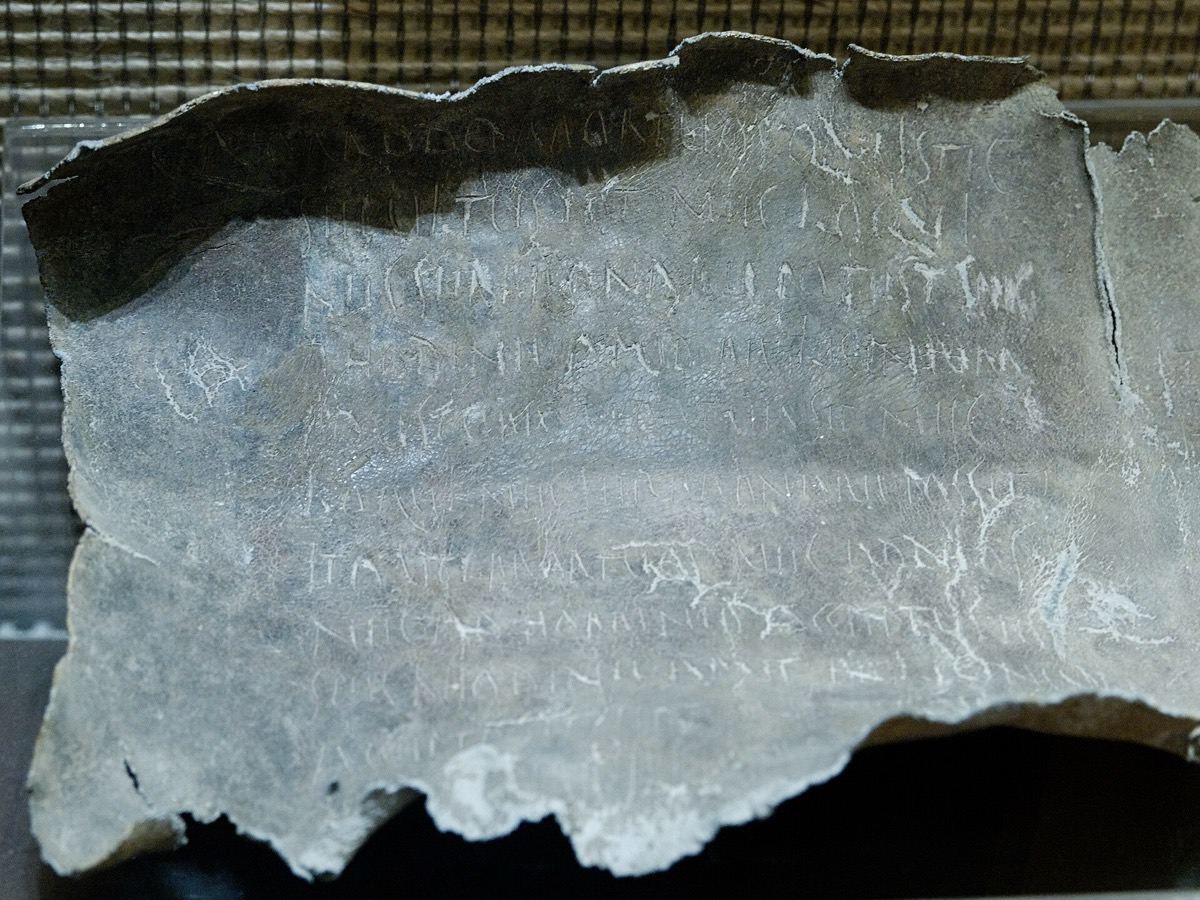
The curse of Rhodine, Rome, first century BC
A lead defixio from the Baths of Diocletian collection: a woman named Rhodine is to be as dead to Marcus Licinius Faustus 'as the corpse buried here', and the tablet was folded and put in a grave to make it so. Lead: cold, heavy, Saturn's metal, the metal of the dead. This is the talisman's shadow — the same technology of name, metal and deposit, pointed at someone.

A British curse tablet, drawn out
Portable Antiquities Scheme record of a lead tablet with an inscribed text. Britain has produced more of these than any province: over a hundred from the sacred spring at Bath alone, mostly about stolen cloaks and gloves, addressed to the goddess Sulis and naming the suspects. The formula is legal, not lurid: 'I give to the goddess the thief, whether man or woman, slave or free.'

The Billingford lamella, Norfolk, second century AD
The other metal. A sheet of gold, rolled and worn in a tube, inscribed in Greek with the names IAO and ABRASAX and a request for protection for one Tiberius Claudius Similis, son of Herminia, from Cologne. Gold does not corrode and does not bind; it is the sun's metal, and lamellae in gold and silver were made across the Roman world by the same craftsmen who cut curses in lead. The metal declared the intent.

A medieval silver finger-ring with inscription
The lamella's descendant: a band engraved inside with a charm-word, seen only by the wearer. The Portable Antiquities Scheme records dozens, with AGLA, with the names of the Magi, with 'IESUS AUTEM TRANSIENS' — the verse used against thieves and sudden death.

A copper-alloy medallion with a magic square
Four faces of a found object: a post-medieval or modern disc, copper for Venus, with a kamea cut on it. Somebody made this to Agrippa's recipe and lost it in an English field. The object says nothing about whether it was cut in the hour, and that is the whole point of my certificate.
I work in gold, silver, copper, tin and iron. I do not work in lead for anyone, and I do not cut a named person's name into anything except at that person's own request. The historical corpus is full of the other kind, and you will be shown it here so that you know it when you see it.
XIVThe Doctor's Talisman
For most of recorded history the talisman was a branch of medicine, prescribed by physicians alongside herbs and bleeding, and this is the use the tradition is most confident about. Ficino was a doctor. Paracelsus was a doctor. The oldest surviving instruction for a written charm is a fever prescription.

The zodiac man, Très Riches Heures, c. 1412–16
Melothesia: each sign governs a part of the body, Aries the head, Pisces the feet. The Limbourg brothers painted it for the Duke of Berry as the frontispiece to a calendar, because it was practical: a surgeon must not open a vein in a limb while the moon stands in its sign. The medical talisman is this diagram made portable, cut in the metal of the planet that rules the ailing part.

A talisman against pestilence
From a manuscript in the Wellcome Collection: a written figure with crosses and names to be carried against plague. Plague talismans are the commonest surviving kind, for the obvious reason that plague was the commonest terror; Paracelsus's own recipe was a disc of gold and silver cast under Leo.

The ABRACADABRA prescription
'Write it on paper, fold, tie with flax, and hang round the neck': Serenus Sammonicus's fever charm, c. AD 200, set out here as a physician would write it. The word loses a letter each line and the fever is to shrink with it. It was still being prescribed by English country doctors in the eighteenth century, and Defoe reports Londoners wearing it in 1665.

A Chinese medical talisman for infertility and miscarriage
A fu, drawn in the celestial script, to be burned and the ash drunk in water — the same ash-writing that the planchette tradition inherited. The Chinese pharmacopoeia lists these beside the herbs, with dosage.
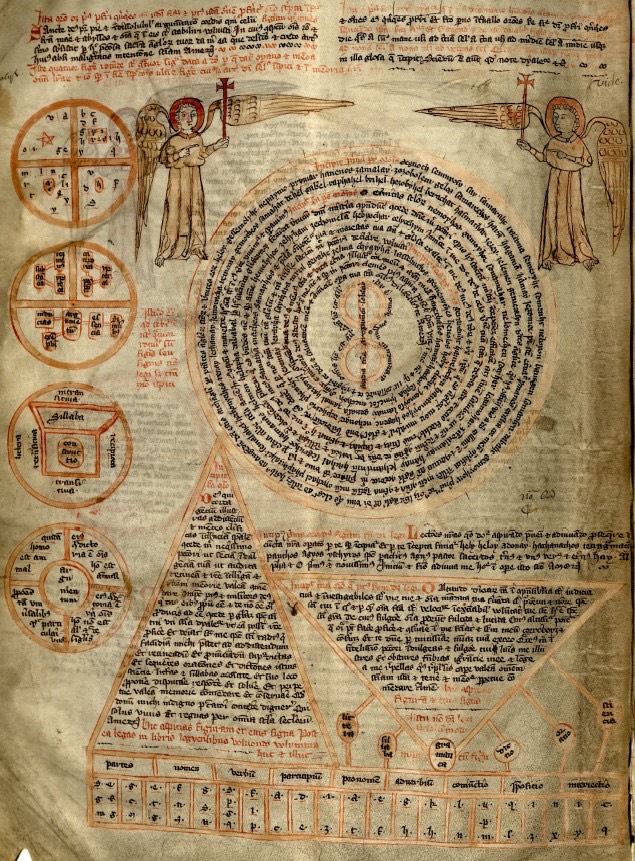
The Ars Notoria, Bodleian MS
The talisman for the mind. A thirteenth-century text attributed to Solomon, whose figures — the notae — were to be gazed upon while reciting prayers, so that grammar, rhetoric, logic and the rest would be infused in a month instead of learned in seven years. Thomas Aquinas condemned it by name, which tells you how many students were trying it.

An astrological diagram, 1801
Pasted inside a book cover: a working chart, the kind a practitioner drew to find the hour. Every talisman on this site begins with a sheet like this.
XVThe Magus, Plate by Plate
Francis Barrett's book of 1801 is the reason the English-speaking world knows any of this. It is nearly all Agrippa, badly translated, but its plates were engraved fresh, and they are the plates from which two centuries of talismans have been copied. Here is the set, so that when you see a 'traditional' design in a shop you can find the page it came from.


XVISigns That Became Talismans
Some figures were not made as talismans and became them: a philosopher's glyph, a Jesuit's arithmetic, a playing card, a folk print. It is worth knowing which is which, because the trade does not distinguish, and a customer who knows the difference is a customer who cannot be sold a souvenir as a working.

Dee's Monas Hieroglyphica, Antwerp 1564
One glyph for everything: the moon's crescent over the sun's circle, on the cross of the elements, on the sign of Aries — fire. John Dee wrote it in twelve days and dedicated it to the Emperor Maximilian, who did not understand it either. Cut as a talisman it claims to contain the whole of astronomy and alchemy in one stroke.
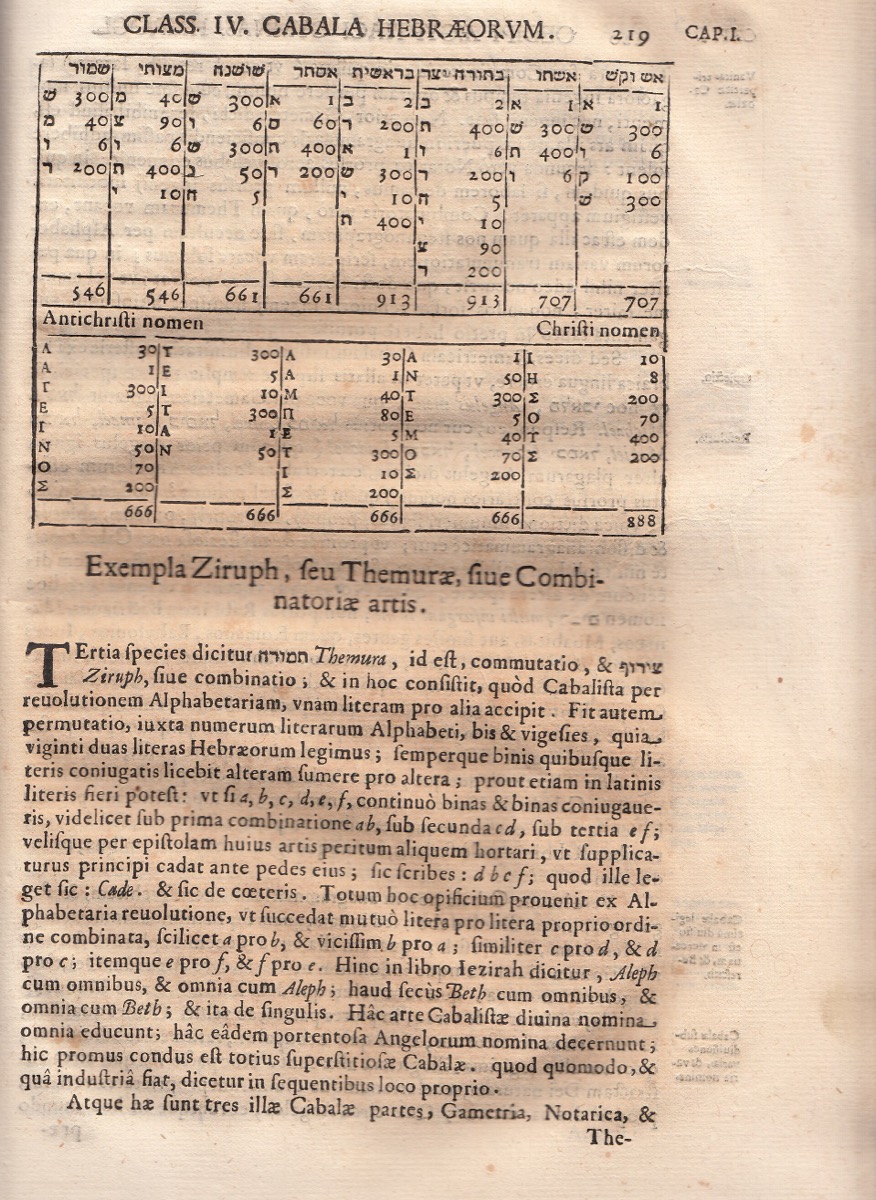
Kircher's table of 666, Oedipus Aegyptiacus, 1652–54
The other side of gematria: if letters are numbers, then a number is a name, and the Jesuit Athanasius Kircher here works the arithmetic of the number of the beast through Greek, Hebrew and Latin. The method is exactly the one used to derive a sigil; only the intention differs.

An uncut tarot sheet, Italy, c. 1500
The Magician was 'Il Bagatella', the juggler, before the occultists of the eighteenth century decided the pack was Egyptian. Tarot cards were not talismans; but the images of the trumps were adopted as talismanic figures from the 1780s on, and a great many people now carry the Magician in metal.

'The Astrologer of the Nineteenth Century', 1825
The frontispiece of a Regency almanac by 'members of the Mercurii', Raphael's circle: a talisman held up by cherubs, with the characters of the seven planets round the rim. Talismans were sold by mail from London in the 1820s, with a printed guarantee. There is nothing new about any of this.
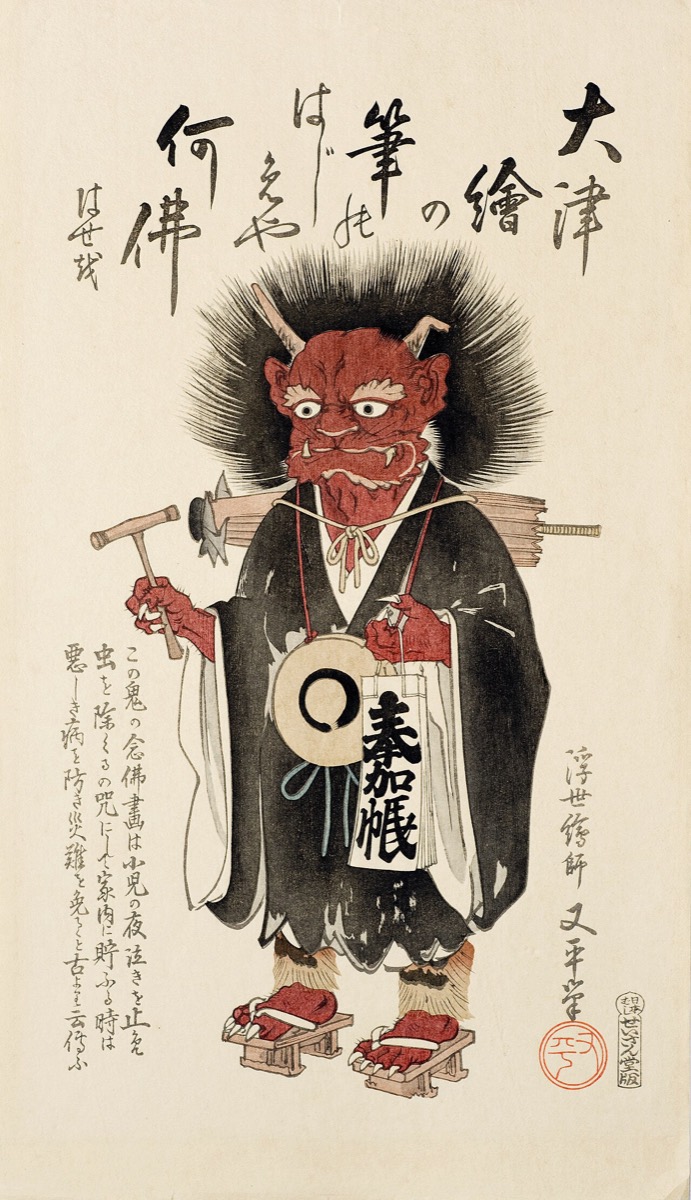
Ōtsu-e: the demon at his prayers
A folk print sold to travellers at Ōtsu on the Tōkaidō road from the seventeenth century. The oni in a monk's robe, ringing his gong, was pasted up in the house to stop children crying at night — a picture that works as a written charm, on the same principle as the fu.

'Primeval, Chinese, Indian and Thibetan talismans'
A plate from an early twentieth-century collector's handbook, of the kind that put the word 'talisman' on the drawing-room table. The mix — a thunderbolt, a Tibetan seal, a Chinese coin-charm, a swastika long before its theft — is exactly the mix the trade still sells, and it is worth knowing that most of these are amulets, not talismans, in the sense argued at the top of this page.
XVIIThe Made Object Around the World
A gallery from the collections, arranged by people, so that whoever you are you can find the form your own tradition gave to the thing.


XVIIILiving Traditions
The made talisman is not a museum subject. Four traditions have carried it unbroken into the present, and between them they cover most of the world's population.
The Islamic talisman
Squares of letters and numbers (the wafq), the ninety-nine names, the Throne Verse, and the seven seals — a line of symbols including a pentagram, a seal of Solomon and a ladder — engraved on silver, written on paper, or printed on a shirt. The talismanic shirt is the extreme case: a whole garment covered in microscopic script and squares, made for a prince to wear under armour, of which the Khalili and Topkapı collections hold spectacular examples.


The Chinese medical talisman
The fu: a written charm in a script deliberately unlike ordinary Chinese, drawn in cinnabar red on yellow paper, functioning explicitly as a document issued by the celestial bureaucracy — with a rank, an addressee and a seal. The Wellcome collection holds manuscripts of talismans for infertility, for miscarriage, for difficult labour and for epidemic disease, which were burned and the ash drunk in water.


The Alpine Breverl
A folded paper packet of printed saints, seals, crosses and abbreviations, holding blessed herb, wax and written prayer, sewn into cloth or leather. Made in the monasteries of Bavaria and Austria and carried by soldiers and pregnant women into the twentieth century. It is the amulet and the talisman fused: found-object protection wrapped around a made and consecrated text.


The written scroll
Ethiopian, Armenian and Jewish practice all produce the long written talisman: parchment or paper, made for one named person, naming the affliction, and rolled into a case. The Matenadaran in Yerevan holds Armenian scrolls of this kind several metres long.


XIXWhat I Make
Everything above is a method, and a method is only worth anything if somebody executes it. The talisman market executes almost none of it: a stamped disc with a kamea on it, made in a factory at whatever hour the machine happened to be running, sold to anybody, for no stated purpose, with no record of when it was cut. By the standards of every book quoted on this page, that object is a souvenir.
I cut in the planet's own metal. I calculate the planetary hour for your latitude and cut in it, and I tell you in writing what hour it was. I derive the figure rather than draw it — by the tracing method above, from the name you give me, on the square you choose. I record the intent you state, and I return it to you with the piece. And where the tradition asks for something I cannot honestly do, I say so instead of pretending.