Aramaic incantation bowls
Meaning
An incantation bowl traps demons. Its spiral of text names the demons, the family being protected and the formulas that bind them, often around a central drawing of a shackled demon or a Lilith figure.
Intent
Bowls were written by specialists for a named client and buried upside down under the floors of houses, especially at thresholds and corners, where they caught and held evil spirits that would otherwise harm the household.
Significance
They are one of the richest sources for everyday religion in late antique Mesopotamia and one of the few places where Jewish, Christian, Mandaean, Manichaean and Zoroastrian practice meet. Formulas also show early forms of the Lilith legend.
History
Around 2,000 bowls are known, dating from the 5th to 7th centuries CE (Sasanian period to early Islamic), mostly from central Iraq around Nippur and Babylon. They are written in Jewish Aramaic, Syriac and Mandaic, and some in pseudo-script by illiterate scribes.
Making yours
15–20 cm unglazed earthenware bowl. Ink text written spiralling outward from a central figure of a shackled demon.Ancient Near East & Levant: the tradition
Mesopotamian protection grew out of a world crowded with named demons, each with a job: Lamashtu killed infants, the utukku haunted, fever demons struck. Exorcists (ashipu) wrote incantation series such as Maqlû and the Lamashtu texts, and amulets put those texts and images to work. Carved stone animal seals of the Uruk period (c. 3500 BCE) are among the oldest amulet-seals anywhere. In the first millennium BCE, Neo-Assyrian and Neo-Babylonian households hung Pazuzu heads and Lamashtu plaques. Phoenician traders spread Egyptianising amulets and glass faces across the Mediterranean, and in Sasanian Mesopotamia Jews, Christians and Mandaeans buried inscribed incantation bowls under their floors.
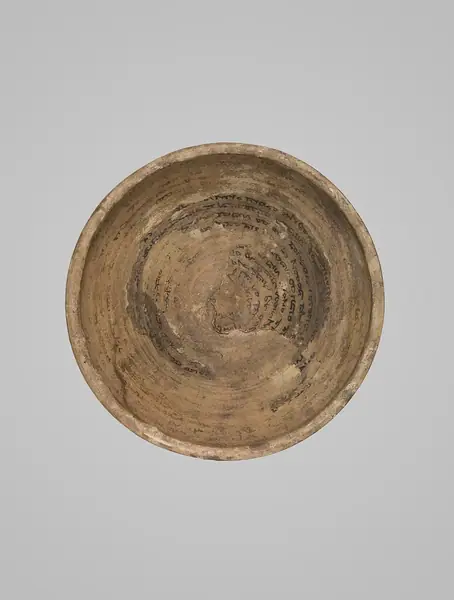 Incantation bowl with Mandaic inscriptionca. 5th–6th century A.D.
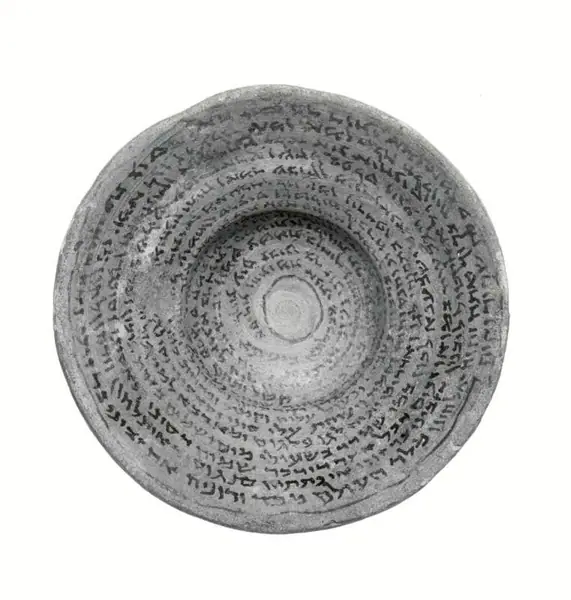 Incantation bowl with Aramaic inscriptionca. 5th–6th century A.D.
 Incantation bowl with pseudo-Aramaic inscriptionca. 5th–6th century A.D.
 Incantation bowl with Aramaic inscriptionca. 5th–6th century A.D.
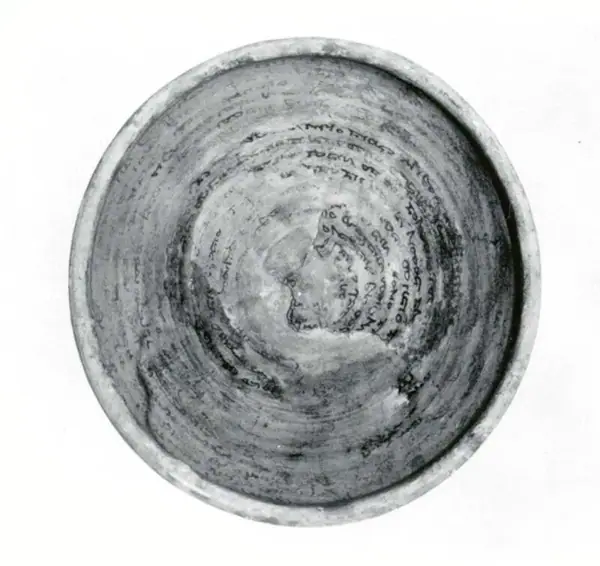 Incantation bowl with Mandaic inscriptionca. 5th–6th century A.D.
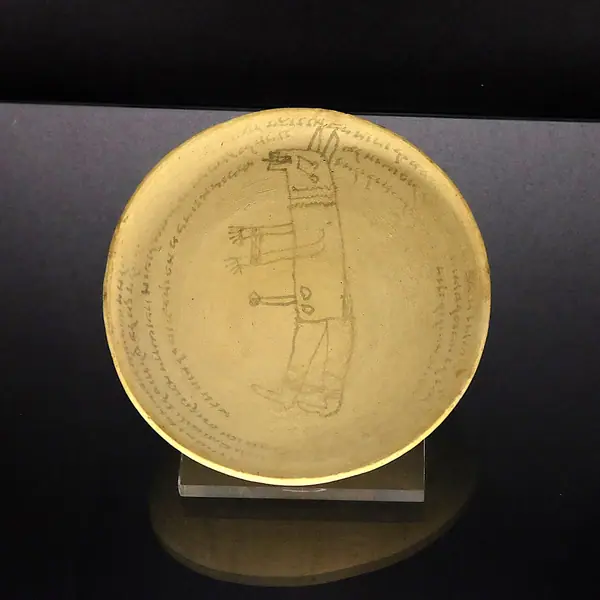 Bol de protection avec une inscription et un démon
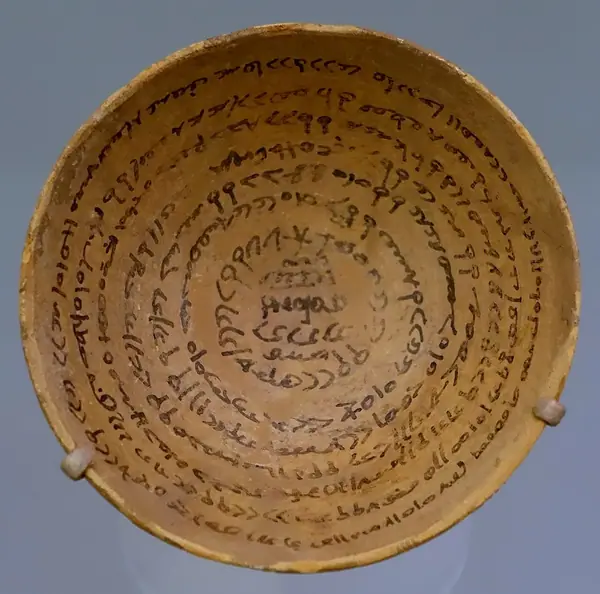 Bowl with painted magical inscriptions, 400-700 AD
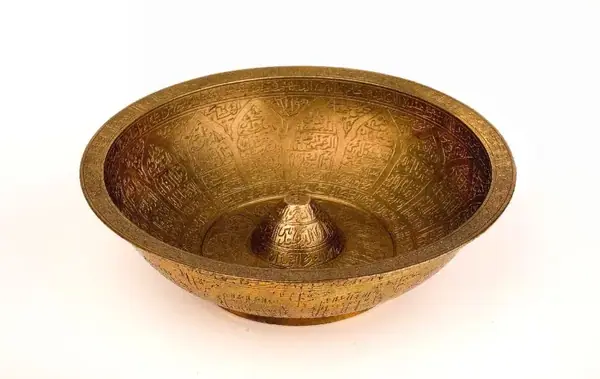 COLLECTIE TROPENMUSEUM Magische schaal TMnr 674-853
 Coupe Araméen Nippur Musée Mariemont
 Curator of Archaeology Bryan Sitch discussing a magic or incantation bowl from Mesopotamia today in -CollectionBites in @thestudymcr at @mcrmuseum this afternoon. Part of the -festivalofarchaeolgy2016
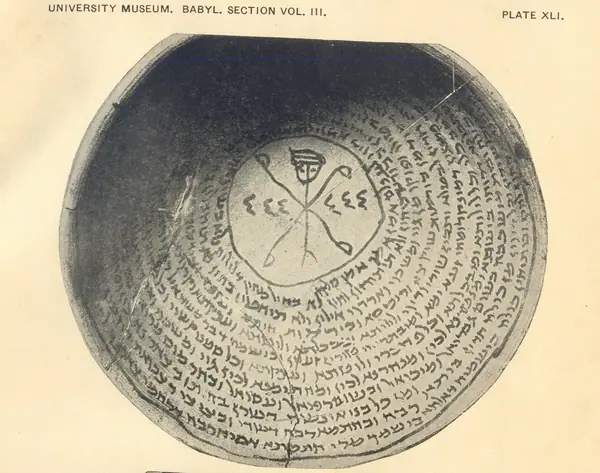 IncantationBowl
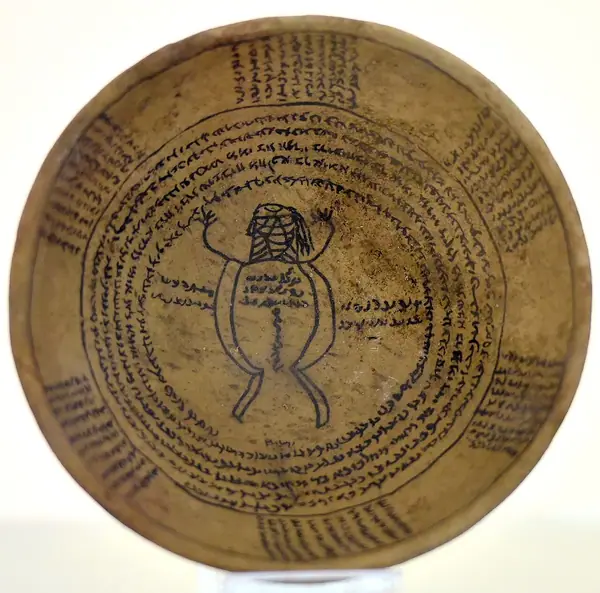 Incantation bowl, from Iraq, Aramaic inscription with a human figure.3rd to 7th century CE. Iraq Museum
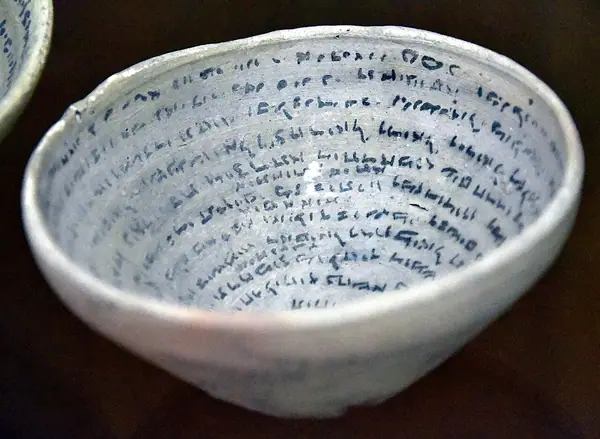 Incantation bowl from Southern Iraq. 4th-7th century CE. Sulaymaniyah Museum
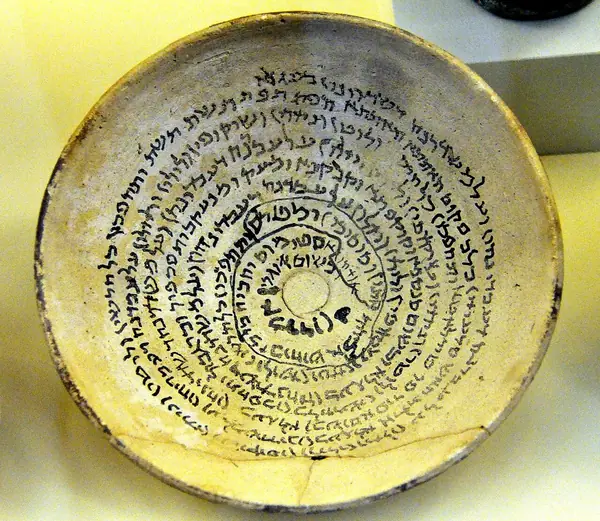 Incantation bowl with Aramaic script, from Babylon, Iraq, 4th to 7th century AD, on display in the Pergamon Museum
 Coupe magique juive-Babylone du Sud-BNUS
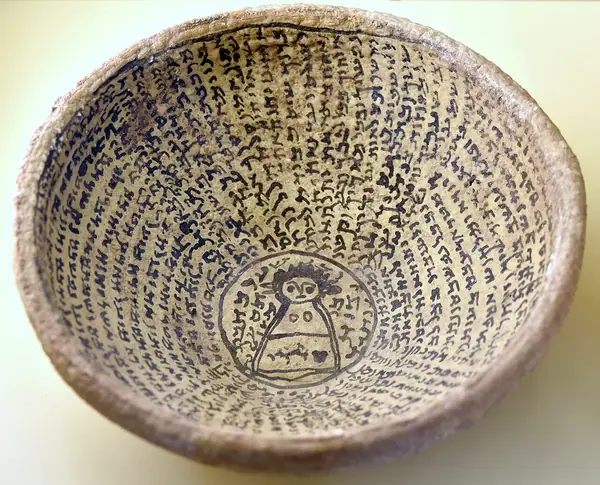 Incantation bowl, from Babylon, Iraq. Aramaic inscription with a human figure, 4th to 7th century CE. Pergamon Museum, Berlin
 Incantation bowl demon Met L1999.83.3
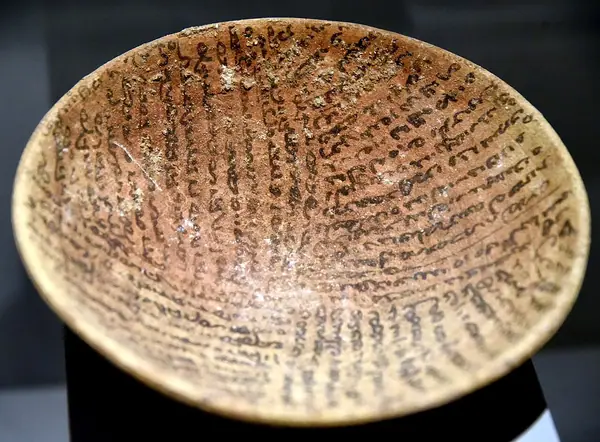 Incantation bowl from southern Iraq, Aramaic inscription. 4th to 7th century CE. Sulaymaniyah Museum, Iraqi Kurdistan
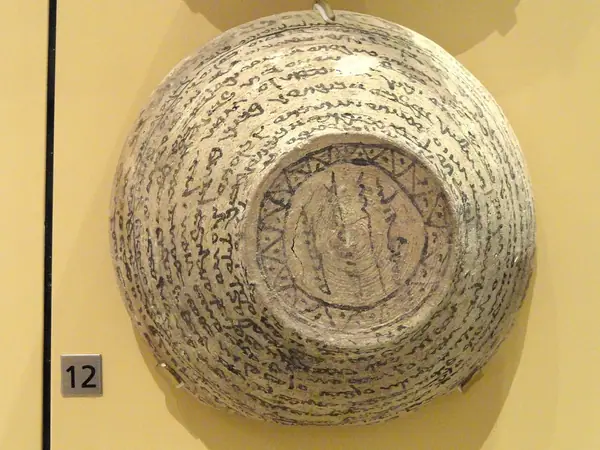 Bowl with incantation for Kuktan Pruk during her pregnancy, Mandean in Mandaic language and script, Southern Mesopotamia, c. 200-600 AD
 COLLECTIE TROPENMUSEUM Magische schaal TMnr 179-2
 Incantation bowl, Aramaic inscription, from southern Iraq, 4th-7th century CE. Erbil Civilization Museum
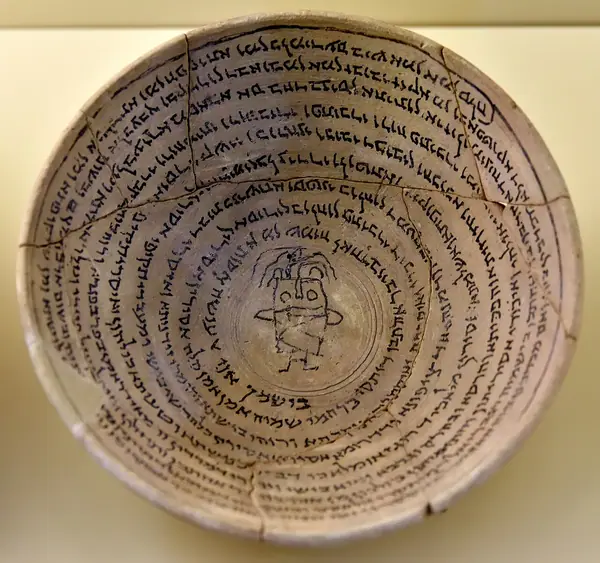 Incantation bowl, from Babylon, Iraq. Aramaic inscription with a human figure. 4th to 7th century CE. Pergamon Museum
 Incantation bowl from Iraq, Aramaic inscription. 4th to 7th century CE. Sulaymaniyah Museum, Iraqi Kurdistan
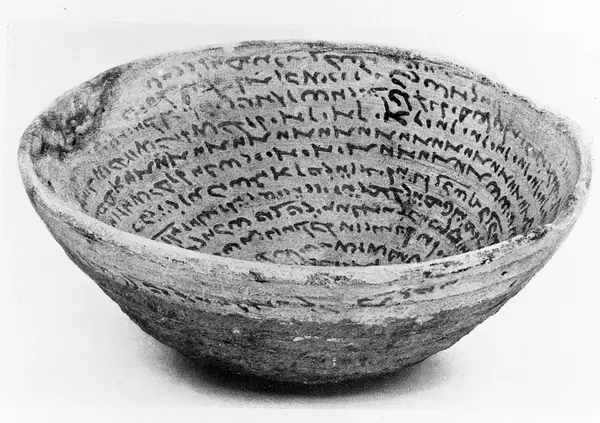 Magical bowl with inscriptions in Mandaic, Mesopotamia.
 Mandaic Incantation Bowl
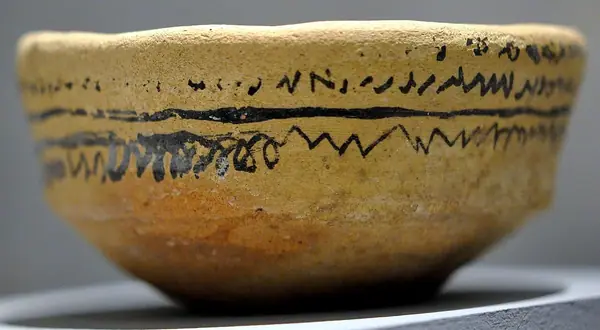 Side view. Incantation bowl from Iraq, Aramaic inscription. 4th to 7th century CE. Sulaymaniyah Museum, Iraqi Kurdistan
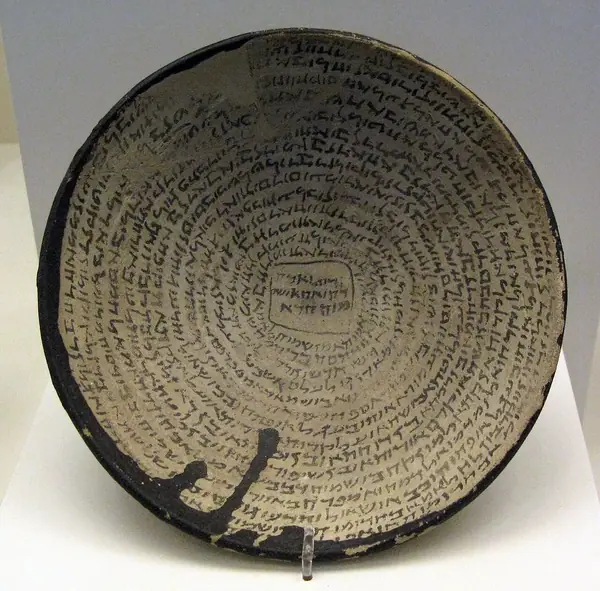 Egyptian Antiquities
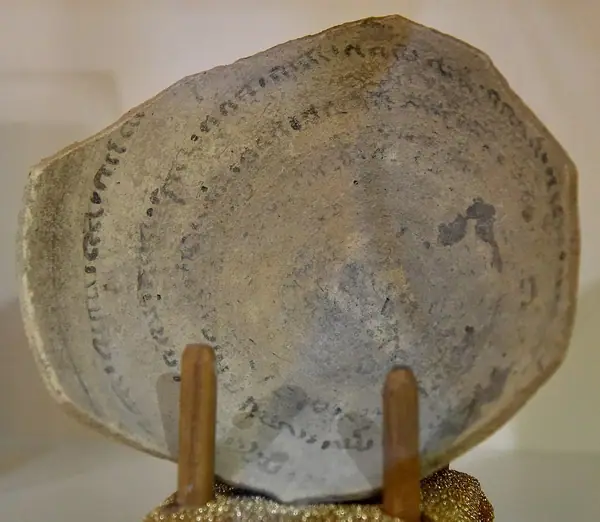 Fragment, incantation bowl, Aramaic inscription, from southern Iraq, 4th-7th century CE. Erbil Civilization Museum
 Incantation bowl, from Babylon, Iraq. Aramaic inscription. 4th to 7th century CE. Pergamon Museum
 Incantation bowl, from Iraq, Aramaic inscription with a human figure and snakes. 3rd to 7th century CE. Iraq Museum
 Incantation bowl from Southern Mesopotamia, Iraq. 4th-7th century CE. Sulaymaniyah Museum, Iraq
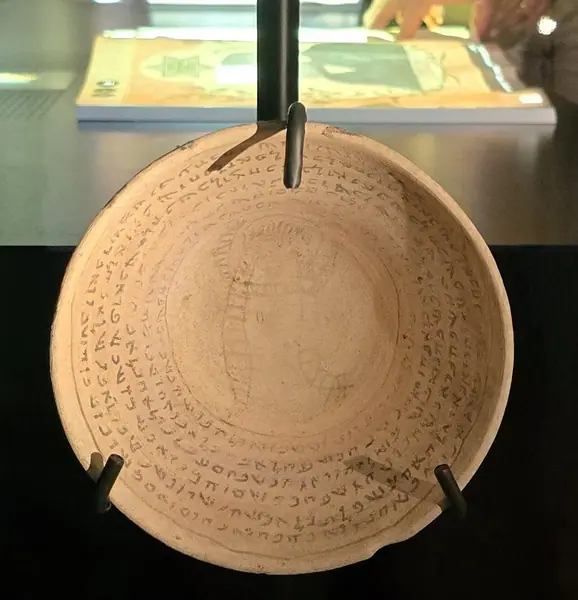 134497 jerusalem national library PikiWiki Israel
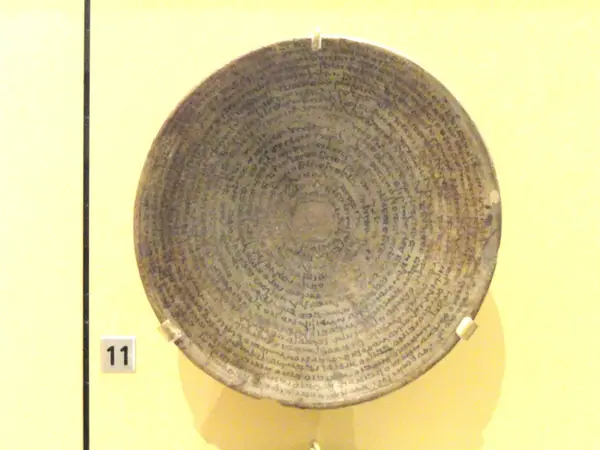 Bowl with incantation to protect Anush Busai and his family against bad luck, Mandean in Mandaic language and script, southern Mesopotamia, c. 200-600 AD
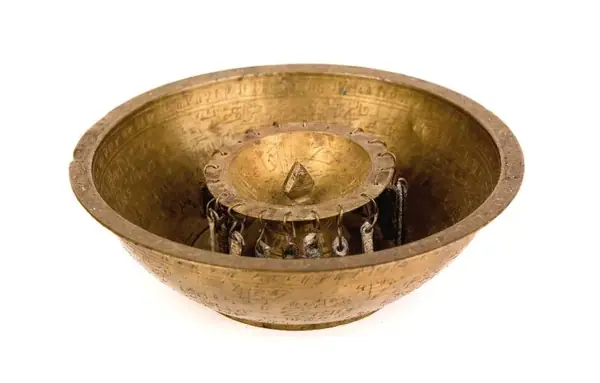 COLLECTIE TROPENMUSEUM Magische schaal TMnr 674-849
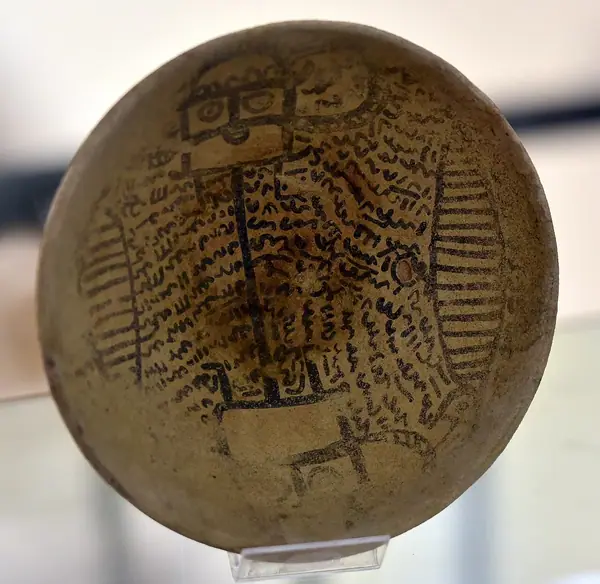 Incantation bowl, from Iraq, Aramaic inscription with a human figure,3rd to 7th century CE. Iraq Museum
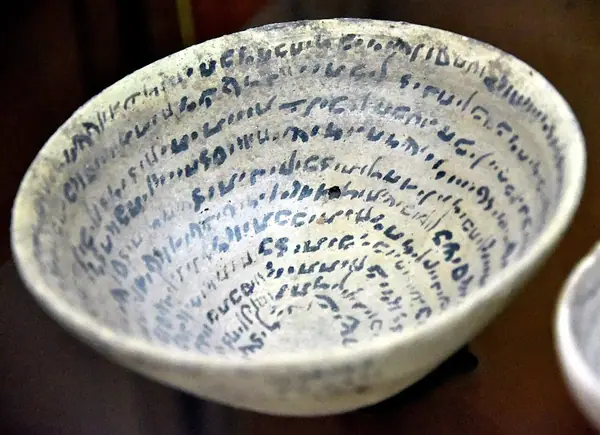 Incantation bowl from Southern Iraq. 4th-7th century CE. Sulaymaniyah Museum, Iraq
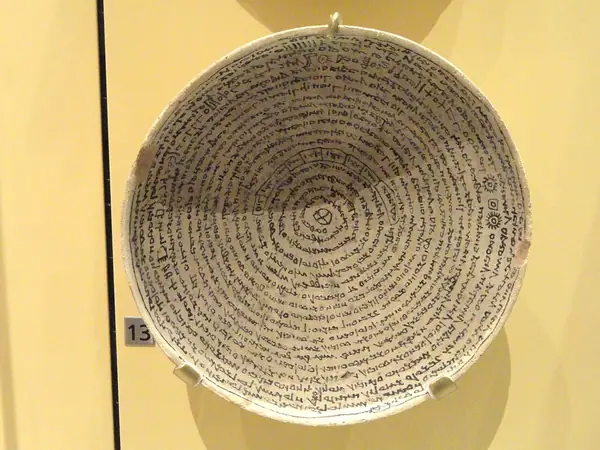 Bowl with incantation for Buktuya and household, Mandean in Mandaic language and script, Southern Mesopotamia, c. 200-600 AD
 Incantation bowl, from Babylon, Iraq. Aramaic inscription with a human figure, 4th to 7th century CE. Pergamon Museum
 Incantation bowl from Iraq, Aramaic inscription. 4th to 7th century CE, Sulaymaniyah Museum, Iraqi Kurdistan
 Incantation bowl in Aramaic language, Nippur, Sasanian period, 240-641 AD
 Mandaic
More from Ancient Near East & Levant: Stamp-seal & animal amulets
Every type in the gallery
Anything in the gallery can be made, by hand, in the prescribed metal or yours and, where the tradition names an hour, at that hour or with a plain note that it was not. Numbered. Price on commission, quoted first. I reply within one business day.